They Called Her Apartment Vacant—Then the Cleaning Worker Saw the Tag That Could Cost Ada Her Home and Her Vote
Chapter 1: The Invalid Ballot
The basement of Bellwether Homes smelled of coffee, wet coats, and old radiator heat when Graham Pike lifted Ada Bell’s ballot from the folding table.
“Invalid,” he said.
Ada, eighty-two, stood straight beneath the fluorescent lights, one hand resting on her cane. Around her, neighbors shifted in their chairs. The annual cooperative vote was supposed to decide repairs, rent protections, and the future of the building. Graham’s thumb covered the apartment number printed on her form.
“My apartment is not vacant,” Ada said.
Graham gave the patient smile he used during meetings. “The registry says otherwise.”
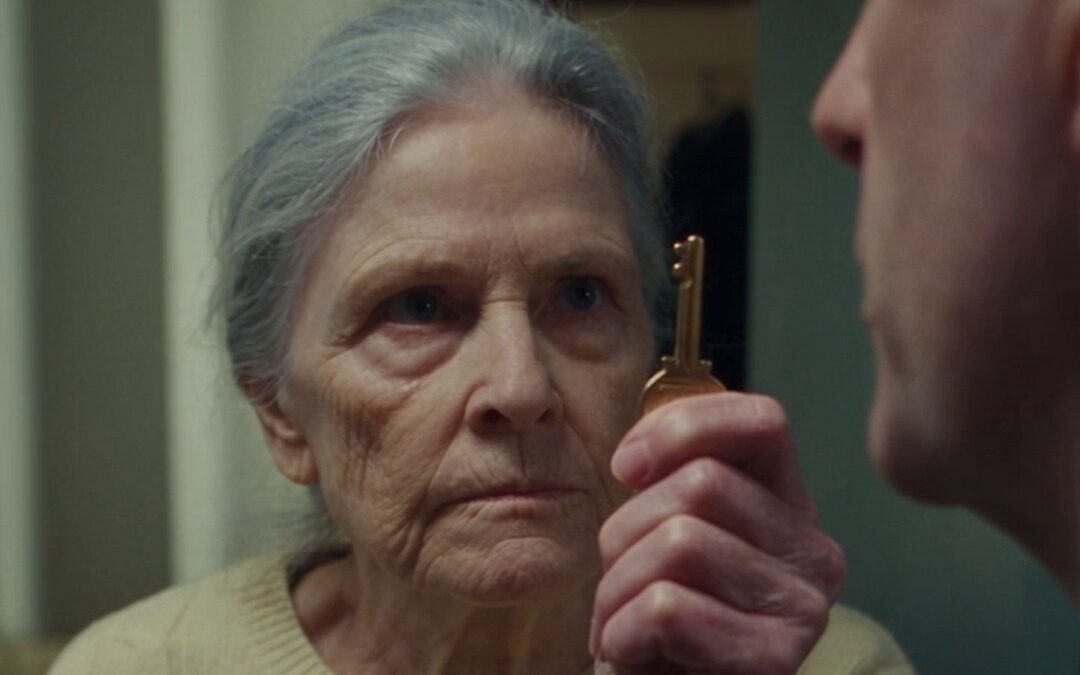
At the back of the room, Leila Grant froze with a stack of cleaning invoices against her chest. She had seen Ada that morning in 4B, watering the basil on her kitchen sill. She had also seen the key hanging from Ada’s hook.
Now an orange paper tag dangled from that same key ring.
Leila stepped closer. The tag was fresh, its ink still dark.
“Where did you get that?” she asked.
Ada looked down. “It was not there when I woke.”
Graham’s expression tightened. “This is a voting table, Ms. Grant. Not a cleaning complaint.”
Leila looked at Ada, then at the neighbors watching her.
For the first time, she placed the invoices on the floor.
Chapter 2: The Door That Wasn’t Empty
Leila had learned, over twelve years of cleaning other people’s hallways, that buildings spoke through small disturbances.
A smear of salt on the lobby tiles meant someone had come in during snow. A chair turned toward the elevator meant an older tenant had been waiting longer than usual. A door left unlatched meant somebody was frightened, distracted, or expecting help.
The orange tag on Ada Bell’s key was another kind of disturbance.
It was tied with thin white string, the knot pulled so tightly that the paper had folded around it. On its face, in block letters, someone had written:
VACANT — 4B
Below that, in smaller ink, was a date.
Today.
Leila could still see Ada’s apartment as it had looked at eight-thirty that morning: the kettle clicking off, two slices of toast cooling on a blue plate, the basil leaves trembling near the open window. Ada had complained about the radiator and then asked Leila whether the cooperative would ever repaint the fourth-floor landing. Nothing about her had suggested departure. Nothing about the apartment had suggested abandonment.
But the voting table was crowded with people who had spent years learning how quickly a record could become more authoritative than a person.
Graham Pike stood behind the table in a navy blazer, his silver hair combed back from a high forehead. He had been board chair for six years. He knew which tenants owed late fees, which maintenance requests could be postponed, and which arguments became quieter if he repeated them in a calm voice.
He held Ada’s ballot between two fingers.
“The registry was updated this morning,” he said. “We have to follow the rules.”
“The registry is wrong,” Ada answered.
“Then you can appeal the occupancy record through the proper process.”
“The vote is now.”
Graham glanced toward the clock above the exit. “Exactly.”
A murmur passed through the basement. Someone coughed. A radiator knocked inside the wall.
Leila saw Ada’s shoulders draw back, not in fear but in concentration. Ada had lived in Bellwether Homes since the building was converted from a factory warehouse in 1971. She had helped organize the first tenants’ committee. She knew where the pipes froze and which basement window leaked during storms. She knew the names of three former board chairs and the birthday of the woman who now sat beside the ballot box.
She also knew that being eighty-two made people mistake patience for surrender.
“I was in my apartment this morning,” Ada said.
Graham placed the ballot beside a stack of accepted forms. “That is not what the official record says.”
Leila looked again at the orange tag.
The paper had been printed, not handwritten. The letters were aligned in a narrow strip, as if produced from an office label maker or a pre-cut property-management form. The date beneath VACANT — 4B was not today’s date.
It was tomorrow’s.
She had read it incorrectly at first because the tag was turned sideways against the key ring. Now she rotated it between her fingers without touching the ink.
Tomorrow.
A day before anyone had voted to change anything.
Graham extended his hand. “Give me the key.”
Ada did not move.
“That key belongs to me,” she said.
“No one is taking your key.”
“You just asked for it.”
“To verify the unit.”
“It is already verified.”
A few neighbors lowered their phones. Leila noticed the movement and felt a chill unrelated to the basement. She had no recording device. She had no proof except what she had seen and what Ada was saying in front of everyone. Her cleaning contract was renewed every spring by the board. Graham signed the authorization. If he decided she had disrupted the meeting, the supervisor could lose her hours, and Leila could lose the contract entirely.
At the edge of the room, Mr. Alvarez from 3A whispered, “Let her vote.”
Graham turned toward him. “This is not a matter of preference.”
“It is a matter of her living here,” said someone else.
Graham’s jaw tightened. “The cooperative cannot operate on anecdotes.”
Leila heard the word settle over the room: anecdotes. It made Ada’s home sound like a rumor.
She picked up the orange tag.
“Mr. Pike,” she said, “I cleaned Apartment 4B this morning.”
The room became still.
Graham looked at her, and the calm in his face changed shape. “You are not authorized to discuss residents’ units in a public meeting.”
“I am authorized to clean them.”
“That does not make you an occupancy officer.”
“I did not say it did.”
“Then please return to your work.”
Leila’s hands were cold. She had worn black rubber-soled shoes, dark gray trousers, and a green cardigan over her cleaning uniform because the basement was always colder than the rest of the building. The cardigan’s cuff was damp from the mop bucket. She had intended to finish the first-floor corridor, collect her invoice, and leave before the vote became another argument about roof repairs.
Instead she stood beside Ada with an orange tag in her hand.
Graham lowered his voice. “Leila, you have a contract here.”
It was not a threat in the way people imagined threats. He did not raise his voice. He did not step close. He only placed the fact between them, polished and unmistakable.
Leila looked at the neighbors. Some stared at the floor. Some watched Graham. Ada watched Leila.
“You were in my apartment,” Ada said quietly.
“Yes.”
“What did you see?”
Leila could have answered with the safe details: a kettle, a basil plant, a blue plate. She could have said that she saw Ada at home, and let Graham argue with memory.
Instead she lifted the key so the orange tag hung in the fluorescent light.
“I saw you there,” Leila said. “And this tag was not on your key.”
Graham reached across the table.
Leila pulled the key back.
The movement was small, but everyone saw it.
Ada’s eyes sharpened. “Why would a vacant apartment have a resident’s key?”
No one answered.
Outside, a bus sighed at the corner. The basement windows rattled. The ballot box sat between a bowl of wrapped mints and a printed agenda that promised transparency in bold black type.
Graham gathered the accepted ballots into a neat pile.
“Until the occupancy record is corrected,” he said, “we cannot count hers.”
“Then correct it,” Ada replied.
“That requires documentation.”
“I am documentation.”
Her voice carried farther than before. A few people turned in their chairs. Ada rested both hands on her cane, not because she needed support but because she wanted them still.
Graham looked toward the building manager, who was standing near the coffee urn. “Mrs. Bell’s unit is listed as vacant. A vacancy affects voting eligibility and maintenance responsibility. We cannot make exceptions because someone says they saw her inside.”
Leila felt the sentence strike the room in two places. Voting eligibility. Maintenance responsibility.
The first threatened Ada’s vote. The second reached toward the apartment itself.
“What happens to 4B if you call it vacant?” asked Mr. Alvarez.
“That is a separate administrative matter.”
“Separate from the person living there?”
Graham’s eyes hardened. “Please do not turn this into a spectacle.”
The word made Leila think of Ada’s door upstairs. She had polished the brass number herself last winter. 4B. A small apartment with a narrow hall, two mismatched chairs, and a window full of basil. A place could be taken away without anyone carrying a box. Sometimes all it required was a line in a registry and enough people willing to respect the line.
Ada reached for the tag.
Leila gave it to her.
Ada studied the orange paper. Her thumb moved over the edge, careful not to smudge the ink.
“This is not the tag the cooperative uses for repairs,” she said.
Graham said nothing.
“Those are white.”
“I don’t handle maintenance tags.”
“You chair the board.”
“I do not inspect every label attached to every key.”
Ada turned to the neighbors. “This tag says vacant. It does not say who inspected my apartment. It does not say when. It does not say where I am supposed to go.”
The building manager shifted near the urn.
Graham’s voice grew firmer. “Mrs. Bell, you are escalating a simple registration error.”
“Then it should be simple to fix.”
A door slammed somewhere overhead. Everyone looked up, listening.
Leila remembered the morning more clearly now. At eight-fifteen, she had unlocked 4B with the master ring. Ada had opened the door before Leila knocked twice. She wore a pale yellow sweater and soft brown trousers. Her hair was pinned at the back with a silver clip. She had complained that someone had moved the framed photograph beside her bed.
Leila had wiped the kitchen counters, vacuumed the living room, and emptied the small wastebasket beside the writing desk. Ada had remained in the kitchen, sorting mail.
At eight-thirty-seven, Leila had left. The key ring had been on the hook beside the door. It held three keys and a small brass bell. No orange paper.
She could say all of that.
But an account was not the same as an official record. Leila knew how institutions treated workers’ memories. They accepted them when useful and dismissed them when inconvenient.
Graham tapped the table.
“We have a schedule to keep. The vote must proceed.”
Ada’s ballot remained outside the box.
Leila looked at the orange tag again. The date tomorrow was visible to her now, unmistakable. She wondered whether Graham had noticed it. His gaze had returned to the key.
A thought came to her, not as a conclusion but as a question: if the tag was meant to announce a vacancy, why had it been tied to Ada’s personal key before the apartment was officially listed?
She did not say the question aloud.
Graham held out his hand again. “The key, please.”
Leila spoke before she could retreat.
“No.”
The word was English, short and plain. It landed harder than she expected.
Graham’s hand lowered.
Leila felt every face in the basement turn toward her. Her contract, her hours, her rent, her own place in the building—all of it seemed to gather around that one syllable.
“No,” she repeated. “The key stays with Ada.”
Graham leaned forward. “You are interfering with a board process.”
“I am bringing the resident to the table.”
“She is already at the table.”
“Then let her vote.”
Graham’s nostrils flared. “You do not understand the consequences of making accusations.”
“I am not accusing anyone.”
“You are implying misconduct.”
“I am saying Ada lives in 4B.”
Ada looked at her, and something warm passed briefly through the older woman’s guarded expression.
Graham turned to the room. “This is precisely why procedures exist. Emotions cannot determine eligibility.”
Ada lifted the orange tag. “Neither can this.”
A neighbor stood. Then another. Chairs scraped the floor, not in a rush, but enough to change the shape of the room. The meeting had begun with one woman being told she did not count. Now the people around her were deciding whether they would remain seated.
The building manager finally approached the table.
“Perhaps we should pause the vote,” she said.
Graham gave her a sharp look. “On what basis?”
“On the basis that there is a dispute.”
“There is always a dispute.”
“Not usually about whether a resident occupies her own apartment.”
A silence followed.
Leila watched Graham’s face. He seemed to be calculating the cost of every possible answer. If he paused, he admitted the matter required attention. If he continued, the neighbors might refuse to accept the result. If he took the key, he would make the scene look like what everyone already feared it was.
Ada slipped the orange tag into the pocket of her cardigan.
“I want my ballot back,” she said.
Graham did not move.
“I want to mark it in front of the neighbors,” Ada continued. “Then I want it placed in the box.”
“Mrs. Bell—”
“My hand is steady.”
She reached for the ballot. Graham’s fingers remained on it.
Leila stepped closer, not touching either of them.
“Let her take it,” she said.
The words were English again. Her voice shook only at the end.
For a moment, Leila thought Graham might refuse. Then the building manager placed a palm on the table.
“Graham.”
He released the ballot.
Ada took it. She did not hurry. She unfolded the paper, read each line, and marked her choices with a blue pen borrowed from the registration table. Her handwriting was small and deliberate. When she finished, she folded the ballot once and placed it into the box herself.
No one applauded. The moment was too tense for applause.
But Mr. Alvarez nodded. The woman beside him whispered, “Thank you.”
Graham stared at the ballot box as if Ada had placed more than paper inside it.
Leila could feel the orange tag through Ada’s cardigan pocket. A scrap of paper no bigger than two fingers had changed the temperature of the room.
The vote resumed after a ten-minute pause. The building manager wrote DISPUTED OCCUPANCY beside Ada’s name on the attendance sheet, then drew a line through it when three neighbors objected. Graham insisted the note remain. The manager kept it in the margin.
No one mentioned the cleaning contract again.
That silence frightened Leila more than an argument would have.
When the meeting ended, people gathered in small groups beneath the basement windows. They spoke softly about records, keys, notices, and whether other apartments might have been listed incorrectly. Graham left through the side door with the building manager. He did not look at Leila.
Ada waited until the room had thinned.
“You should not have done that,” she said.
Leila began gathering abandoned coffee cups. “Which part?”
“Standing beside me.”
“You were standing already.”
Ada’s mouth curved faintly. “You know what I mean.”
Leila stacked the cups. “I saw you this morning.”
“That does not make you responsible for me.”
“No.”
“Then why?”
Leila looked at the orange tag in Ada’s hand. “Because they were asking for your key.”
Ada folded the paper in half. “Maybe they wanted to check a mistake.”
“Maybe.”
“You do not believe that.”
“I believe mistakes usually look messier.”
Ada studied her. “You have been watching the building.”
“I clean it.”
“That is not what I said.”
Leila carried the cups toward the coffee urn. The room smelled sour now, the warmth gone from it. “There are things people notice when they are paid to look at floors.”
Ada followed slowly, her cane making a soft, regular sound.
“Did you see anything else?”
Leila thought of the hallway outside 4B. The carpet had been damp near the elevator. A faint streak of orange adhesive clung to the brass plate beside Ada’s door. She had assumed it was a scrap from the tag. She had wiped at it with her thumb, but the residue had resisted the first pass.
“No,” Leila said, then corrected herself. “Not enough to say.”
Ada accepted the distinction.
Upstairs, the fourth-floor corridor was quiet. Afternoon light entered through the narrow stairwell window and lay across the carpet in a pale rectangle. Ada walked toward 4B. Leila followed with the cleaning cart, though her shift had officially ended.
The orange tag remained folded in Ada’s palm.
At the door, Ada stopped.
The lock was turned. The key slid in easily.
Inside, everything appeared as Leila remembered it. The kettle sat on the counter. The blue plate remained beside the sink. The basil leaned toward the window. Nothing obvious had been disturbed.
Ada entered first.
“See?” she said. “Not vacant.”
Leila stood in the doorway, looking past her.
A small white envelope rested on the writing desk.
Ada had not mentioned it.
Leila’s gaze moved to the envelope, then back to Ada. “Was that there this morning?”
Ada frowned. “No.”
She approached the desk. The envelope had no stamp and no name. Its flap was sealed with a strip of clear tape.
Leila did not touch it.
Ada reached out, then stopped. Her hand hovered above the paper.
“Should I open it?” she asked.
Leila had no answer. She knew only that the afternoon had begun with an invalid ballot and ended with a sealed envelope inside a supposedly empty apartment.
Ada looked at her. “You can leave.”
Leila glanced toward the hall.
The sensible thing was to leave. She had already contradicted Graham in front of the neighbors. She had already made herself visible. Whatever happened next could be handled by the board, by a lawyer, by someone who was paid to understand property records.
But the orange tag had carried tomorrow’s date.
And the envelope had not been there that morning.
“I’ll wait,” Leila said.
Ada removed the tape with the edge of her key. Inside was a single sheet of paper.
She read it silently.
“What does it say?” Leila asked.
Ada held the sheet at arm’s length. “It says the board will inspect 4B tomorrow at nine.”
Leila looked at the orange tag.
“Did they give notice?”
Ada shook her head.
“Maybe the envelope is the notice.”
“Maybe.”
“Will they come in?”
“They have a master key.”
The words settled between them.
Leila walked to the hallway and looked at the lock. The door had no chain, only a brass knob and a peephole. She remembered cleaning it that morning. She remembered leaving the key on the hook.
“Can they remove your things?” Leila asked.
“Not without a process.”
“Does this count as a process?”
Ada folded the notice. “It counts as paper.”
Outside, the elevator bell sounded. Neither woman moved.
Footsteps passed the apartment door, slow and measured. They stopped.
Leila held her breath.
A shadow crossed the thin line of light beneath the door.
Then the footsteps continued toward the stairs.
Ada slipped the notice into the same pocket as the orange tag.
“You should go home,” she said.
“So should you.”
Ada smiled without humor. “I am home.”
That night, Leila could not sleep. Her own apartment was on the second floor, directly beneath 4B. Every pipe creak seemed deliberate. Every elevator movement brought her upright in bed.
At eleven, she went into the hall and looked through the stairwell window. Philadelphia rain silvered the courtyard. The windows of Bellwether Homes glowed unevenly: televisions, kitchens, lamps left on for children, the blue flicker of a phone.
The fourth-floor light in Ada’s apartment remained lit.
Leila returned to bed.
At six-thirty the next morning, she went upstairs before her shift. Ada opened the door wearing the pale yellow sweater from the day before. Her silver hair was pinned neatly. The basil had been watered.
On the kitchen table sat the orange tag, the notice, and a ring of keys.
“I did not sleep,” Ada said.
“Neither did I.”
“Then we are both making poor decisions.”
Leila picked up the notice but did not read it again. “We should call someone.”
“Who?”
“A tenants’ rights office.”
“After they arrive?”
“Before.”
Ada glanced at the clock. Eight-forty-three.
The building’s management office was on the first floor. Leila knew the receptionist would not arrive until nine. Graham sometimes came earlier on meeting days, but today there was no scheduled meeting.
“Do you have another lock?” Leila asked.
Ada shook her head. “I am not hiding in my home.”
“I didn’t mean that.”
“I know.”
At eight-fifty, someone knocked on 4B.
Three firm taps.
Ada stood. “Stay here.”
Leila moved beside the kitchen doorway. “You want to open it?”
“I want to see who is there.”
Ada approached the door and looked through the peephole.
“What do you see?”
“Graham.”
Leila’s stomach tightened.
“Anyone else?”
“The building manager.”
“Open it?”
Ada kept her hand on the knob. “I am deciding.”
From the hall, Graham spoke.
“Mrs. Bell, we need to inspect the unit.”
Ada’s eyes met Leila’s.
“Do you have written notice?” Ada called.
“We delivered notice yesterday.”
“I received it yesterday afternoon.”
“Then you know why we are here.”
“I know what the paper says.”
Graham’s voice remained even. “This can be easy.”
Leila felt the old pressure return, the polished threat disguised as efficiency.
Ada looked toward the orange tag on the table.
“Easy for whom?” she asked.
No answer came immediately.
The building manager shifted outside. A key ring clicked.
Leila stepped closer to Ada. “Do not let them take the key.”
Ada nodded.
Graham knocked again, harder.
“Mrs. Bell, we are not asking permission to perform a safety inspection.”
Ada lifted her chin. “Then show me the authority.”
Silence.
Leila could hear water moving through the pipes. Somewhere below, a child laughed. The building continued its ordinary morning around the locked door.
Graham spoke again.
“We can involve the police if you refuse entry.”
Ada’s expression did not change, but her fingers tightened around the cane.
Leila’s heartbeat became loud in her ears.
No one had threatened violence. No one had broken the door. This was not the kind of danger that left a bruise or shattered glass. It was the quieter danger of official voices, master keys, and a resident being made to feel unreasonable for asking to remain in her own home.
Ada turned to Leila.
“If I let them in,” she said, “they will say I agreed.”
“If you do not, they will say you obstructed.”
“Yes.”
“What do you want to do?”
Ada looked at the door.
“I want the neighbors to see.”
She unlocked it.
Graham stood in the corridor with the building manager behind him. He wore the same navy blazer, though his shirt was different. In his right hand he held a clipboard. In his left, a narrow plastic sleeve containing papers.
His gaze moved past Ada and settled on Leila.
“You are not authorized to be here.”
“I live in the building,” Leila said.
“You are off duty.”
“I am visiting.”
Graham looked at Ada. “We need to inspect the unit.”
“Why?”
“We have concerns about occupancy.”
“You have my ballot.”
“This is separate.”
“Everything is separate until it becomes the same.”
A door opened farther down the hall. Mr. Alvarez appeared in slippers. Across the corridor, a young mother lifted her toddler onto one hip and watched.
Graham noticed the audience.
“This is a private matter,” he said.
Ada stepped fully into the doorway. “Then do not bring it into the hallway.”
The building manager glanced at her clipboard. “The notice permits an inspection.”
Ada held out her hand. “Let me read it.”
The manager hesitated, then passed over the paper.
Ada read the first paragraph. “This says the unit is believed to be unoccupied.”
Graham said, “That is correct.”
“I am standing in it.”
“The purpose of the inspection is to verify.”
“Verify what?”
“That you are occupying the unit.”
Ada looked at the orange tag on the table behind her. “You already decided I was not.”
Graham’s tone sharpened. “No one is evicting you.”
“You marked my key vacant.”
“It is an administrative designation.”
“You excluded my ballot.”
“Because the registry was not current.”
“You sent an inspection notice to a home you say is empty.”
Graham’s face closed.
Leila watched the neighbors listening. The hallway had become another voting table, but this time no one had a ballot in front of them. They were deciding whether to witness.
Mr. Alvarez said, “What happens if she refuses?”
Graham turned. “Nothing happens if she cooperates.”
Ada laughed once, quietly. “That is not an answer.”
The building manager looked uncomfortable. She had a pen tucked behind one ear and a folder pressed against her chest. “We only need to document the condition of the unit.”
“You can document it from the doorway,” Ada said.
“That is not sufficient.”
“Why?”
The manager did not reply.
Leila saw the plastic sleeve in Graham’s hand. Inside was a form with several boxes. One line had been highlighted in orange.
The same orange as the tag.
She could not read the words from where she stood. She did not move closer. Tiny text would not prove anything, and she did not want to mistake a color for a conclusion.
Graham extended his hand toward Ada.
“Your keys, please.”
The corridor tightened.
Ada looked at him. “No.”
“We need access.”
“You are at my door.”
“We need to inspect the locks.”
“The locks work.”
“Give us the keys.”
Leila stepped between the table and the entrance, not blocking the doorway but making the path visible.
“She keeps them,” Leila said.
Graham looked at her. “You are making this worse.”
“Then stop asking for her keys.”
For the first time, his composure broke. “You are an employee of this cooperative.”
“No. I clean for a contractor.”
“Your contract is subject to review.”
Leila felt the statement land. The neighbors heard it. Ada heard it. Graham knew they heard it.
Mr. Alvarez stepped into his doorway. “That sounds like a threat.”
“It is a reminder of professionalism.”
“No,” Leila said. “It is a reminder that you can punish me.”
Graham’s face reddened.
Ada turned toward the corridor. “He is right.”
Leila looked at her.
“He can punish you,” Ada said. “That is what makes your choice matter.”
The words quieted Leila more effectively than reassurance could have.
Graham’s eyes moved from one woman to the other. “This is absurd. Mrs. Bell, if you do not permit the inspection, we will document your refusal.”
Ada handed the notice back to the building manager.
“Document it.”
The building manager took the paper.
Graham stared at Ada.
“Document that I am home,” Ada said. “Document that I answered the door. Document that I asked you to explain your authority. Document that you requested my keys.”
The building manager’s pen hovered above the clipboard.
“Should I write all that?” she asked.
Ada met her eyes. “Yes.”
The pen touched the page.
No one spoke while she wrote.
From the street below came the rumble of a delivery truck. A siren rose somewhere beyond the row houses and faded. The ordinary sounds made the corridor feel more real, as if the building itself were recording what happened without needing a camera.
When the manager finished, she looked at Graham.
“What now?” she asked.
He did not answer.
A second door opened. Then another. More residents appeared, pulled out by the same invisible force that had gathered them in the basement.
Graham placed the clipboard beneath his arm.
“This matter is not concluded,” he said.
Ada’s hand remained on the door.
“Neither is my home,” she replied.
Graham turned away. The building manager followed him down the hall.
The neighbors stayed.
Mr. Alvarez came first. He carried a mug of coffee and wore a red robe. “My registry says my apartment has one occupant,” he said. “My daughter has been staying with me since January.”
The young mother said her parking space had been reassigned while she was away at the hospital.
Someone from 4C said a maintenance notice had appeared on her door without a date.
The stories did not prove they were connected. They did not prove Graham had planned anything. They were only accounts, each with its own uncertainty. But when people spoke them aloud, they stopped being isolated.
Leila returned to Ada’s kitchen.
The orange tag still lay on the table.
Ada closed the door and leaned against it.
“You should call the tenants’ office,” Leila said.
“I will.”
“And keep the notice.”
“I will.”
“And take a photograph of the tag.”
Ada looked toward her. “You said there was no camera.”
“I said I did not bring one to the meeting.”
Ada almost smiled. “You are learning to be precise.”
Leila picked up her phone, then stopped. “Do you want me to take a picture?”
Ada considered.
“Yes,” she said. “Of the tag and the notice. Together.”
Leila placed them side by side on the blue kitchen table. The orange paper looked brighter against the wood. The date tomorrow sat beneath the word VACANT. Beside it, the notice declared that an inspection had been authorized because the unit was believed to be unoccupied.
Leila took one photograph.
Then another, wider, with Ada’s basil plant at the edge of the frame.
The phone made no sound.
Ada sat at the table. “What happens now?”
“Now the tenants’ office answers.”
“And if they do not answer?”
“Then we call again.”
“And if the board changes the locks?”
Leila looked at the key ring.
“They would have to come through the door.”
Ada nodded. “That is why they want the key.”
The thought had been circling Leila since the basement. She finally said it aloud.
“Maybe the tag was placed to make the key look like evidence.”
“Evidence of what?”
“That you left.”
Ada’s gaze dropped to the orange paper. “I have not left.”
“I know.”
“But someone wants the record to say I did.”
Leila did not answer. The distinction mattered. Wanting a record to say something was not the same as proving who wanted it. They could not leap from a tag to a culprit.
At ten, the tenants’ rights office returned Ada’s call. A volunteer named Nina listened while Ada described the ballot, the tag, and the inspection notice. Nina asked questions in a careful order.
When had Ada last entered the apartment? This morning.
Who had access to the key? Ada, and the cooperative’s cleaning staff through a master ring.
Had anyone threatened her? No direct threat.
Had the board issued a written eviction notice? No.
Was the apartment still occupied? Yes.
Nina advised Ada not to surrender her keys, to keep all notices, and to request a written explanation of the occupancy designation. She said the voting issue and the housing issue might involve different procedures, but the timeline should be documented.
“Can you send us the photograph?” Nina asked.
Ada looked at Leila.
Leila nodded.
After the call, Ada sat quietly for a while.
“You heard her,” Leila said. “The issues may be separate.”
“They are not separate to me.”
“No.”
“My vote concerns what happens to this building. My home is where I live while that happens.”
Leila placed the phone beside the sink.
Ada reached for the orange tag. “Do you think I should keep it?”
“Yes.”
“Even if it is only paper?”
“Especially if it is only paper.”
By noon, word had traveled through Bellwether Homes. Residents stopped Leila in the lobby and asked what she had seen. She repeated only the facts. Ada had been home. The tag had not been on the key that morning. The tag was dated tomorrow. Graham had asked for the key. Ada had voted.
Leila refused to add anything she did not know.
That restraint disappointed some people.
“Who put it there?” asked the young mother.
“I don’t know.”
“Graham?”
“I don’t know.”
“The manager?”
“I don’t know.”
“Then what are we supposed to do?”
“Write down what happened to you.”
It was less satisfying than naming someone. It was also safer.
In the afternoon, Leila went to the management office to submit her cleaning invoice. The receptionist, a woman named Carol, accepted it without looking up.
“Your supervisor wants to see you,” Carol said.
Leila’s stomach tightened. “When?”
“Now.”
The supervisor’s office had frosted glass and a door that never closed properly. Graham was inside with the building manager. Leila paused outside.
Graham saw her through the glass.
“Come in.”
She did.
Her supervisor, Mr. Han, sat behind the desk with Leila’s invoice in front of him. He was a small man with neatly trimmed gray hair who disliked conflict because it complicated scheduling.
“Graham says there was an incident at the meeting,” he said.
“An occupancy dispute.”
“He says you interfered.”
“I told the truth about what I saw.”
Graham leaned back. “You made statements outside your role.”
“I said I cleaned 4B.”
“You challenged the board’s determination.”
“I said Ada was there.”
“You refused to surrender a key.”
“I did not have the key. Ada did.”
Graham’s eyes narrowed. “You encouraged her to refuse access.”
“No.”
“You stood beside her.”
“Yes.”
The answer seemed to irritate him more than denial would have.
Mr. Han looked between them. “We need to keep the cleaning contract separate from board matters.”
“I agree.”
“Then you should avoid becoming involved in disputes involving residents.”
Leila looked at Graham. “If I see something relevant to a resident’s safety or housing, I will not pretend I did not see it.”
Graham’s fingers tapped once against the arm of his chair.
Mr. Han sighed. “Leila.”
“I am not asking for special treatment.”
“No one said you were.”
“I am asking to continue my work.”
Graham said, “The board can review vendor access.”
The sentence was soft.
Leila looked at Mr. Han.
He lowered his eyes to the invoice. “Your contract is still active.”
“For now?” she asked.
“Leila.”
She picked up the invoice.
Graham said, “You should be careful about turning a misunderstanding into a campaign.”
Leila stopped at the door.
“Then give Ada a written explanation,” she said.
She left before he could answer.
In the lobby, the rain had stopped. Sunlight came through the glass entrance and turned the wet pavement silver. Ada was sitting on a bench beside the mailboxes, her cane across her knees.
“How did it go?” she asked.
“I still have a job.”
“For now?”
“For now.”
Ada nodded. “That is a truthful answer.”
Leila sat beside her.
For several minutes they watched people enter and leave. A courier carried a stack of packages. Two children argued over a red umbrella. The elevator doors opened and closed with their familiar reluctant shudder.
“Founding tenants are not supposed to become evidence,” Ada said.
“What are they supposed to become?”
“Stories people tell after the building is safe.”
Leila looked at her. “Was it ever safe?”
Ada considered the question. “Sometimes it was protected.”
“By whom?”
“By whoever chose to stand in the hallway.”
That evening, the board posted a notice near the mailboxes announcing that the annual vote results would be certified the following morning. The notice said nothing about Ada’s ballot. It mentioned a “clerical discrepancy” and promised “appropriate administrative review.”
Residents gathered around it.
The language was smooth enough to hide inside. No one had been denied a vote; there had merely been a discrepancy. No one had sought access to an occupied home; there had merely been an inspection. No one had threatened a worker; there had merely been a reminder about professional conduct.
Leila read the notice twice.
Ada stood beside her.
“They are turning events into nouns,” Leila said.
Ada glanced at her. “What does that mean?”
“Discrepancy. Review. Procedure. It makes people disappear.”
Ada looked at the notice. “Then we will use verbs.”
“What verbs?”
“I live here. I voted. They asked for my key.”
The next morning, the hallway outside 4B was crowded before nine. Residents came with their own papers: maintenance notices, rent receipts, photographs of door tags, letters that had never been answered. Nobody knew whether the documents related to Ada’s situation. Nobody claimed they did.
They simply brought them.
Graham arrived at nine-ten.
He stopped at the end of the hall when he saw the residents. The building manager stood behind him, carrying a folder. Two board members accompanied them, neither looking at Leila.
Ada opened her door before they knocked.
“We are here to certify the vote,” Graham said.
“Good,” Ada replied.
“We also need to complete the inspection.”
“No.”
Graham’s gaze moved over the residents. “This is not an appropriate setting.”
“It is the setting you created.”
He held up a sheet of paper. “The board has reviewed the occupancy information.”
Ada did not take it. “And?”
“Your status remains under review.”
“Am I a resident?”
Graham paused.
The pause was small, but everyone heard it.
“You occupy the unit,” he said finally.
“That was not my question.”
“Mrs. Bell—”
“Am I a resident?”
The building manager looked at the floor.
Graham’s lips tightened. “The board recognizes your occupancy pending verification.”
“Then my ballot counts.”
“The certification has not been completed.”
“Will it?”
“We will follow the governing documents.”
Ada looked toward Leila. “That is another noun.”
A few neighbors smiled despite themselves.
Graham’s expression darkened. “We are not here to debate language.”
“No,” Ada said. “You are here to decide whether I am visible.”
Graham turned to the building manager. “Complete the certification.”
The manager opened the folder.
Before she could speak, Leila noticed something in Graham’s hand.
A second orange paper tag.
It was folded lengthwise, hidden beneath the clipboard.
Only the top edge showed. The paper was the same bright orange as the tag Ada had kept. A small black line of printing curved around the fold.
Leila’s eyes fixed on it.
Graham saw her looking.
For a moment neither moved.
Then he slid the second tag from beneath the clipboard.
The hallway fell quiet.
He did not explain it. He did not say it belonged to Ada. He did not say where it had come from.
He held it between his fingers as if it were another administrative form.
Ada stepped into the doorway.
“What is that?” she asked.
Graham looked at her, then at the door marked 4B.
The date printed on the second orange tag was visible now.
Tomorrow.
His hand began to rise toward the brass key ring still resting in Ada’s palm.