The Morning My Stepmother Announced Dad Had Changed His Will, the Old Kitchen Timer Started Counting Down
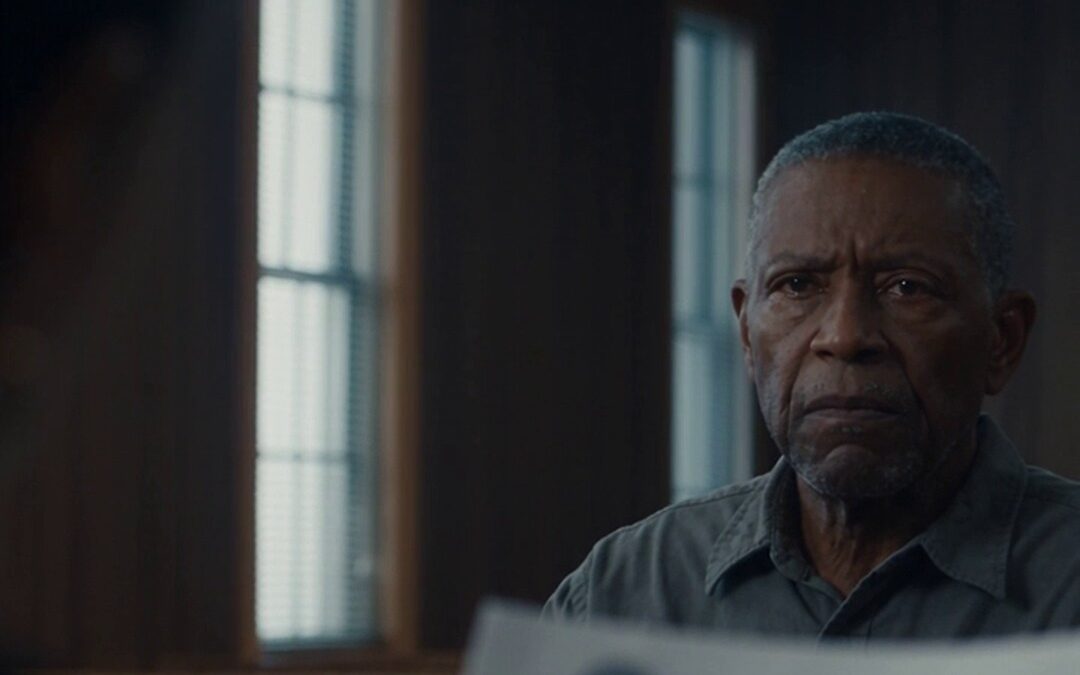
Chapter 1: The Breakfast Notice
Vanessa slid a blue folder across the breakfast table, beside Dad’s red enamel rooster timer.
“Your father signed this last night,” she said.
Dad stared at his oatmeal, his spoon trembling over the bowl.
I opened the folder and found a photocopy of a trust amendment removing me from everything.
“Where is the original?” I asked.
“Being filed,” Vanessa said.
The rooster timer clicked toward eight fifteen, the time Mom had once set for Dad’s heart medicine.
Dad looked at it and whispered, “I didn’t sign anything.”
Vanessa’s hand closed around his wrist.
“You were confused,” she said.
I reached for my phone, but Vanessa snatched it first.
“You don’t get to frighten him with accusations in his own house.”
The paper carried Dad’s signature, but the final loop in his name leaned differently.
I had spent six years checking signatures and dates at the Blanco County records office.
That loop was wrong.
Vanessa stood and tucked the folder under her arm.
“By noon, you’ll be out of this family’s business.”
Then Dad’s pill bottle fell from his hand.
A white tablet rolled beneath the rooster timer.
When I bent to retrieve it, I saw a second paper taped underneath the timer.
It read, in Mom’s handwriting, “If Vanessa ever says he signed at breakfast, check the care log.”
Chapter 2: The Care Log
For three seconds, nobody moved.
Then Vanessa kicked the paper beneath the table.
“You planted that,” she said.
Dad looked at me instead of her.
“Lena, what does it say?”
I picked up the note and held it where he could see.
“It says to check the care log.”
Vanessa’s face hardened.
“There is no care log in this house.”
“That’s what makes the note interesting.”
She reached for it, but I stepped back.
Dad’s chair scraped against the tile.
“Vanessa, let her read it.”
“You’re agitated,” Vanessa said.
“I’m scared.”
The rooster timer clicked again.
I turned it over and found a strip of masking tape beneath its metal base.
The tape carried the date Mom had died, March 14, 2021.
Underneath it, Mom had written three words.
“Ask Marta first.”
Vanessa saw the writing and went pale.
“Your mother hated me.”
“My mother died before you moved in.”
“She knew what you were like.”
Dad pushed himself upright, one hand gripping the table.
“Stop talking about her like she’s here to defend you.”
Vanessa’s voice softened instantly.
“Frank, you need your medication.”
“I need to know what I signed.”
“You signed a routine update because Lena has been pressuring you.”
I looked at the folder.
“What routine update removes me as successor trustee and transfers the ranch house to Vanessa?”
Dad’s eyes lifted.
“I didn’t know about a ranch house.”
Vanessa moved toward him.
“Your memory is failing.”
The sentence landed harder than the accusation.
Dad’s mouth tightened, but his fingers began to shake.
I took the pill bottle from the floor and read the label.
The pharmacy sticker said one tablet at eight fifteen in the morning.
The rooster timer showed eight twelve.
I set the timer upright.
“Dad, did you take this medicine yesterday?”
Vanessa answered for him.
“He takes it every morning.”
“That wasn’t my question.”
“He doesn’t remember yesterday.”
Dad looked toward the sink.
“I remember breakfast.”
Vanessa snatched the pill bottle.
“We’re done.”
She pulled Dad’s chair away from the table.
I caught the chair before it struck the wall.
“Don’t move him.”
“Get out of my house.”
“It’s Dad’s house.”
“Not after the amendment.”
“That amendment isn’t valid just because you printed it.”
Vanessa’s eyes flicked toward the front hall.
“Call the police if you think you’re so clever.”
I wanted to.
Dad’s legal papers named Vanessa as his medical power of attorney, and she had already told the deputies twice that I was harassing him over money.
Without evidence of immediate danger, a patrol officer would separate us, not investigate a trust.
I picked up my purse.
“I’m taking the note.”
“You’re stealing from me.”
“I’m preserving handwriting.”
Dad reached for my sleeve.
“Don’t leave me with this.”
Vanessa stepped between us.
“Your father needs rest.”
Dad’s fingers slipped away.
I left because arguing in the doorway would give her exactly what she wanted.
The house sat on two acres outside Blanco, with limestone walls and a porch Mom had screened herself.
As I walked to my car, I saw the kitchen curtains move.
Dad was still standing there.
I drove fifteen minutes to the Hill Country Haven assisted-living residence in Johnson City.
Marta Alvarez met me beside the medication cart.
She was the facility administrator, a compact woman with silver streaks in her black hair and the patience of someone who had spent twenty years explaining rules to families.
“You look like you slept in your clothes,” Marta said.
“Vanessa showed me a trust amendment.”
Marta stopped walking.
“Is Frank safe?”
“I don’t know.”
“That answer is why you’re here.”
I handed her Mom’s note.
Marta read it twice.
“Your mother left this timer in our office.”
“Why would she?”
“Because she wanted me to keep a record.”
“Of what?”
Marta glanced toward the locked medication room.
“Frank stayed here for eleven days after his fall last winter.”
“I know.”
“No, you know he was discharged.”
“I drove him home.”
“Vanessa signed the discharge pickup.”
I stared at her.
“Vanessa told me the facility refused to release him to anyone else.”
“That’s not what happened.”
Marta opened a cabinet and removed a thin binder.
The cover read FRANK RUIZ, TEMPORARY RESPITE.
“Why didn’t you call me?”
“Your father’s admission paperwork listed Vanessa as primary contact.”
“My number was on every document Mom left.”
“Not on the intake form.”
I turned the first page.
The form listed Frank’s diagnosis as vascular cognitive impairment with fluctuating orientation.
It also listed his discharge condition as “requires supervision for medications and financial decisions.”
My stomach tightened.
“Who wrote this?”
“Our nurse completed the assessment.”
“Is she here?”
“Off today.”
Marta pointed to the signature.
“Vanessa acknowledged the care plan.”
Vanessa’s initials appeared beside the sentence about financial decisions.
I remembered her telling me Dad had been perfectly clear after the fall.
“He said she was confused,” I said.
“Maybe she was.”
Marta closed the binder.
“I am not taking sides.”
“You’re protecting your license.”
“Yes.”
Her bluntness steadied me.
“What can you tell me?”
“I can tell you that a care plan is not a court finding.”
“But it can show what professionals observed.”
“It can show what we observed on those dates.”
Marta led me to a computer terminal.
The facility kept electronic medication administration records for every dose given during respite care.
A green check mark appeared beside each scheduled medication.
“Read the dates,” Marta said.
January 6.
January 7.
January 8.
On January 9, the morning heart medicine showed a red triangle.
“Refused?” I asked.
“Not refused.”
Marta clicked the entry.
“Not administered because the resident was absent.”
“Absent?”
“Vanessa signed him out at six thirty-seven that morning.”
I looked at the discharge page.
“He wasn’t discharged until January seventeenth.”
“Correct.”
“Where did she take him?”
“Her form said a cardiology appointment.”
“Was there one?”
Marta pointed to the visitor and transportation log.
“No outside transport was recorded.”
The red triangle seemed brighter than the rest.
“Why didn’t anyone report it?”
“Because the next day she brought him back.”
“She left him without medication.”
“We documented it and notified the physician.”
“Did you notify me?”
“The physician’s office had Vanessa listed as authorized contact.”
I felt heat rise behind my eyes.
Marta pulled up the physician notification.
The system showed a fax confirmation from January 9.
The fax went to a number ending in 4412.
My mother’s old house number ended in 4412.
“Vanessa gave them Mom’s disconnected fax line,” I said.
Marta frowned.
“That is what the system shows.”
I photographed the screen.
Marta put her hand over my phone.
“Not without a records request.”
“I’m not publishing it.”
“I know.”
She released the phone.
“Still, obtain it properly.”
The care log contained one more entry.
At 6:42 p.m. on January 9, the nurse documented that Frank returned with a blister pack missing two tablets.
The note read, “Daughter informed by spouse.”
I read it twice.
“Which daughter?”
“The nurse wrote daughter because that’s what Vanessa said.”
“Did you verify it?”
“No.”
Marta’s expression changed.
“Lena, if you believe your father is being abused, call Adult Protective Services.”
“I need more than a bad day.”
“You need enough to protect him.”
“Vanessa will say I’m after the house.”
“Are you?”
“My father’s house is not the point.”
Marta gave me a tired look.
“It becomes the point when someone uses it to explain every concern.”
She printed the care-plan page and placed it in an envelope.
“I can release records to the resident or authorized representative.”
“Vanessa is the authorized representative.”
“Your father can request his own records if he has capacity.”
“Does he?”
“That is the question.”
I drove back to Blanco and parked at the public library.
I needed to check whether Mom’s note was genuine.
The library had a scanner, a notary on Tuesdays, and a quiet room where nobody from my family could hear me panic.
I scanned the note beside a copy of Mom’s old handwritten recipes.
The capital A in “Ask” matched the angle in “Apricot.”
The narrow loops in “ever” matched Mom’s grocery lists.
The note was hers.
The question was when she had written it.
I called Dad.
Vanessa answered after one ring.
“What do you want?”
“Dad.”
“He is sleeping.”
“It’s eleven twenty.”
“He had a difficult morning.”
“Put him on.”
“He doesn’t need another interrogation.”
“I want to ask whether he remembers Hill Country Haven.”
There was silence.
Then Dad said, “I’m here.”
Vanessa must have put the phone on speaker.
“Dad, did Mom leave a note under the rooster timer?”
“What note?”
I read it aloud.
His breathing changed.
“Rosa put that timer in the kitchen.”
“Did she tell you to ask Marta?”
“Not that I recall.”
Vanessa interrupted.
“You see how confused he is?”
Dad said, “I recall the rooster.”
“Do you recall signing something last night?”
“I signed a page.”
“What page?”
Vanessa’s voice sharpened.
“A routine banking authorization.”
Dad paused.
“No.”
“You signed the amendment,” Vanessa said.
“I signed a page at breakfast.”
“That is not last night.”
“I don’t know.”
I closed my eyes.
“Dad, did you sign in front of a notary?”
Vanessa took the phone away.
“Stop harassing him.”
The call ended.
I sat in the library room until the fluorescent lights began to buzz.
Then I searched the county clerk’s public index.
A trust amendment had not been recorded, because trusts were usually private.
A deed transfer, however, had to be recorded.
I found a document filed two days earlier.
The grantor was the Frank Ruiz Revocable Trust.
The grantee was Vanessa Ruiz.
The property description covered the house and the two-acre parcel.
The consideration was ten dollars.
The notarization date was January 9.
The document had been submitted by a title company in San Marcos.
My hands went cold.
January 9 was the day Vanessa had taken Dad out of Hill Country Haven.
I printed the deed and drove to the title company.
The receptionist recognized the property address.
“Are you with the trust?”
“I’m Frank Ruiz’s daughter.”
“I can’t discuss a file without authorization.”
“I’m not asking for confidential contents.”
I placed the recorded deed on the counter.
“I’m asking whether this signature was notarized in your office.”
The receptionist called a senior escrow officer.
A man named Daniel Cho came out with a gray folder.
He read the deed without touching it.
“You understand I can’t disclose private client information.”
“I understand.”
“Then why are you here?”
“Because the deed says the signing happened here on January 9, at 6:15 p.m.”
Daniel looked at the date.
“Those appointments are logged.”
“Can you confirm whether my father attended?”
“I can confirm nothing without a subpoena.”
“Was the notary employed here?”
“Our mobile notary contractor.”
“Does the log preserve the appointment time?”
Daniel hesitated.
“It preserves check-in and check-out.”
“Please preserve it.”
That made him look at me.
“Why?”
“Because if this is a valid deed, the truth will help Vanessa.”
“And if it isn’t?”
“Then the records may disappear into an ordinary retention cycle.”
Daniel’s professional expression tightened.
“I will preserve any file upon written request.”
He handed me a form.
I filled it out at the counter.
When I finished, Daniel stamped the request and gave me a receipt.
“Do not contact the notary yourself,” he said.
“I wasn’t planning to.”
“Good.”
Outside, I called the number on the deed.
It belonged to an attorney named Graham Pritchard.
He answered from a courthouse hallway.
“Ms. Ruiz, I represent Vanessa regarding the property.”
“Did you draft the deed?”
“I did.”
“Did you witness Frank sign it?”
“No.”
“Who did?”
“I’m not discussing privileged communications.”
“Was it signed January 9?”
“The deed speaks for itself.”
“Was my father competent to sign?”
“That is a medical question.”
“Did you ask for a capacity evaluation?”
“I advised Vanessa that a person must understand the nature and consequences of a transfer.”
“Did you meet Frank?”
“Briefly.”
“Where?”
“At the house.”
“Was Vanessa there?”
“Of course.”
“Was anyone else?”
“Ms. Ruiz, if you believe a crime occurred, contact law enforcement.”
“I believe my father may be under pressure.”
“Then petition for guardianship.”
The call ended.
His answer was reasonable.
That frightened me more than an insult would have.
I drove to the Blanco County courthouse.
The probate clerk explained that emergency guardianship required an application, medical information, and a hearing.
“Can the judge stop a deed today?” I asked.
“Not without a case.”
“Can I file one?”
“You can file an application for temporary guardianship.”
“Would my father lose his rights immediately?”
“No.”
“Would Vanessa be notified?”
“Yes.”
“So she could move him or sell the property.”
“The court can issue temporary orders if the affidavit supports immediate danger.”
I took the forms.
The clerk pointed to the signature line.
“Do not exaggerate.”
“I won’t.”
“Family disputes are not automatically incapacity cases.”
“I know.”
I went to my car and called Dad again.
This time he answered.
“Where are you?”
“At home.”
“Is Vanessa there?”
“Outside.”
“Dad, do you remember January ninth?”
He was quiet for so long that I thought the call had dropped.
“She said we were going to see a doctor.”
“Did you?”
“We drove to San Marcos.”
“Did you see one?”
“We stopped at an office.”
“What office?”
“An office with glass doors.”
“Was it a doctor’s office?”
“No.”
My grip tightened around the phone.
“What happened there?”
“She told me to sign.”
“What did she say it was?”
“She said the bank needed proof she could pay the bills.”
“Did you read it?”
“I tried.”
“What stopped you?”
“She put her hand over the page.”
His voice shrank.
“Then she said you would take the house and put me in a place.”
“Did she say I wanted that?”
“She said you had already talked to a lawyer.”
“I haven’t.”
“I know.”
Behind him, a door slammed.
Dad lowered his voice.
“She has the key.”
“What key?”
“The blue one.”
“Where is it?”
“In the rooster.”
I looked at the timer in my lap.
The small blue key was not there.
“Dad, what does the key open?”
“The drawer Mom never let me touch.”
“What drawer?”
“Her desk.”
Vanessa came onto the line.
“Frank, who are you talking to?”
Dad hung up.
I filed the temporary guardianship application that afternoon.
I attached the care-plan page, the medication entry, the recorded deed, and my affidavit describing the breakfast incident.
The clerk accepted it but warned me that acceptance was not a ruling.
A hearing was set for three days later.
That evening, Vanessa called me.
“You filed against your father.”
“I filed to protect him.”
“You filed to control him.”
“I asked for temporary supervision.”
“You want his property.”
“I want him to be able to tell the court what he wants.”
“You’re going to make him testify about his memory.”
“If he has capacity, the judge will hear him.”
“And if he doesn’t?”
“Then the court will decide what protects him.”
She laughed once.
“You’ve always confused paperwork with love.”
“You’ve always confused control with care.”
Her voice went flat.
“You’ll regret making me choose between you and Frank.”
“You already chose.”
The call ended.
I slept on my sister’s couch that night.
My sister, Maribel, lived in Dripping Springs with her wife and their twelve-year-old son.
She had not spoken to Dad since Christmas because Vanessa had accused her of stealing prescription coupons.
“You’re shaking,” Maribel said.
“I’m fine.”
“You say that when you’re about to do something expensive.”
“I may need a lawyer.”
“That is expensive.”
“I know.”
“Then stop pretending this is only about documents.”
I looked at the rooster timer on her coffee table.
“Dad is afraid of her.”
“Dad is afraid of disappointing everyone.”
“That isn’t the same thing.”
“No, but it makes him easy to use.”
I told her about the care log.
Maribel folded a dish towel.
“Why didn’t you call Adult Protective Services?”
“Because I needed to know whether this was confusion or coercion.”
“You know now.”
“I know something happened.”
“That is enough to report.”
“I filed the guardianship.”
“Report it anyway.”
“I’m afraid they’ll decide it’s a family argument.”
“Then give them facts, not conclusions.”
She picked up her phone.
“Call while I’m sitting here.”
The Texas Abuse Hotline took the report and asked whether Dad was in immediate physical danger.
“I don’t know,” I said.
“Is there current medication access?”
“I don’t know.”
“Is he isolated from family?”
“Yes.”
“Does someone control his finances or transportation?”
“Yes.”
The intake worker gave me a reference number.
“An investigator may contact you within twenty-four hours.”
Maribel took the rooster timer from me.
“Why did Mom leave this?”
“I don’t know.”
“Maybe the key is still inside.”
We examined the base under a lamp.
A seam ran along the red metal body.
I found two tiny screws hidden under the rubber feet.
Maribel stared at me.
“Did you bring a screwdriver?”
“I work in county records.”
“That explains nothing.”
Her wife brought a small tool kit.
I removed the screws and lifted the base.
Inside was a narrow brass key taped to a folded receipt.
The receipt was from a San Marcos locksmith.
The date was March 12, 2021.
Two days before Mom died.
The service line read, “Duplicate key, desk drawer, customer present.”
Maribel whispered, “Mom knew.”
I unfolded the receipt.
On the back, Mom had written a phone number.
I called it.
A woman answered on the fourth ring.
“Bluebonnet Locksmith.”
“My mother, Rosa Ruiz, used your company in March 2021.”
“Do you have the invoice number?”
I read it.
The woman checked her system.
“Duplicate key for a locking desk drawer.”
“Do you keep work notes?”
“We keep invoices for seven years.”
“Was my mother present?”
“I can’t discuss customer information.”
“She left me this key.”
“That doesn’t authorize me to disclose private details.”
“I’m not asking what was in the drawer.”
The woman hesitated.
“Your mother asked us to make two keys.”
“Two?”
“One for her and one sealed in a red envelope.”
“Where was the second key sent?”
“To a law office.”
“Which law office?”
“Ruiz and Patel, in Austin.”
That was Mom’s estate attorney.
I called the office and reached a receptionist.
The attorney, Priya Patel, returned my call ten minutes later.
“Rosa told me not to open the envelope unless Frank’s capacity was challenged or someone attempted to transfer the house.”
I closed my eyes.
“Why didn’t you tell me?”
“Because the instruction was private, and no trigger occurred until the recorded deed.”
“Is there a document in the desk?”
“There is a written direction and a copy of the operating agreement for the care residence.”
“What does that have to do with the house?”
“Everything, if Vanessa transferred it.”
Priya asked me to come to Austin the next morning.
“Bring the key and the recorded deed.”
“I can’t afford a long legal fight.”
“Rosa paid for the first hour.”
“Why?”
“Because she anticipated one.”
At dawn, I drove to Austin.
Priya placed a red envelope on the conference table.
The seal carried Mom’s initials.
“I am opening it because the trigger occurred,” she said.
Inside was a letter and a certified copy of an operating agreement.
The letter began, “Frank will tell you Vanessa does not understand the house.”
I read the sentence again.
Priya watched me.
“Your mother was precise.”
The agreement concerned Hill Country Haven LLC.
Mom had founded the residence in 2008 with two nurses and a retired contractor.
Dad had contributed the land.
The agreement gave him a twenty-five percent membership interest.
Mom held fifty percent.
The remaining twenty-five percent belonged to a family trust supporting employee education.
After Mom’s death, her membership interest transferred to a successor member named in a sealed schedule.
The schedule named Lena Ruiz.
I looked up.
“I own half of Hill Country Haven?”
“You own the membership interest.”
“I never received notice.”
“Notice was mailed to the address listed in the schedule.”
The address was my college apartment in San Marcos.
“I moved six years ago.”
“Your mother’s instructions required you to notify the company when your address changed.”
“I didn’t know I was named.”
“Which is why your mother also appointed you successor manager if Frank became unable to serve.”
My chest tightened.
“Is Frank unable to serve?”
“Only a court can determine that.”
“Then what is Vanessa doing?”
Priya turned to the recorded deed.
“She attempted to convey the ranch house.”
“Can she?”
“Not entirely.”
“Why?”
“The house is owned by the LLC, not by the trust.”
I stared at the property description.
“Then why did the county record it?”
“Because a recorder checks formal requirements, not beneficial ownership.”
“So the deed looks real.”
“It is recorded.”
“But it may not transfer title.”
“Correct.”
“Why would Vanessa try something that obvious?”
“Because she may believe the old deed is still in Frank’s name.”
“Was it?”
“It was before your mother contributed the property to the LLC.”
“When?”
“March 15, 2021.”
The day after Mom died.
I felt the room tilt.
“Dad signed the transfer?”
“Your mother signed as manager before her death.”
“Would she have had authority?”
“She had the membership vote.”
“Why hide it?”
Priya pointed to the operating agreement.
“Rosa expected Frank to keep managing the property until he retired.”
“And Vanessa?”
“Vanessa was never a member.”
A second clause required any transfer of company property to be approved by a majority of membership interests.
I owned fifty percent.
The employee trust owned twenty-five percent.
Dad owned twenty-five percent.
Vanessa could not approve the transfer alone.
“Why did Mom leave the key?”
“Because she believed records could be overlooked.”
“She thought Vanessa would do this.”
“She thought someone might.”
Priya handed me a certified copy of the transfer instrument.
“Your mother’s filing survived because the company’s annual report was submitted with the Secretary of State.”
I recognized the pattern.
Routine filings had preserved what family members assumed was private.
“Who can verify the LLC ownership in court?”
“The registered agent.”
“Marta?”
“Marta is the current administrator, not the registered agent.”
“Who is?”
“Her accountant, Samuel Ortiz.”
I knew Samuel.
He had complained for years about missing signatures and late invoices.
“Would he help?”
“He has no reason to lie.”
“He also has no reason to get dragged into our family.”
“Give him a subpoena if necessary.”
I left Priya’s office with certified copies and a bill for the first hour.
The guardianship hearing began at nine the next morning.
The courtroom smelled of old carpet and copier toner.
Dad sat beside Vanessa.
She wore a navy blazer and held his hand.
Graham Pritchard sat behind them.
Marta sat two rows back.
I had not asked her to come.
She had chosen to.
The judge called the case.
Vanessa’s attorney stood first.
“Your Honor, this is a property dispute disguised as a guardianship emergency.”
He spoke calmly.
“Mr. Ruiz is an adult who has expressed a preference to remain with his spouse.”
Vanessa squeezed Dad’s hand.
“He has a right to make his own choices.”
The judge looked at me.
“Ms. Ruiz, what relief are you requesting?”
“Temporary guardianship limited to medical and financial protection while the court evaluates my father’s capacity.”
“Are you requesting removal from his home?”
“No.”
“Are you requesting control of his assets?”
“Only a freeze on transfers until the court determines whether the deed was authorized.”
The judge nodded.
Vanessa’s attorney lifted the deed.
“The property transfer was completed before this application.”
“It was recorded,” I said.
“Exactly.”
“Recording does not establish authority.”
“That is a title issue.”
“It is also the reason immediate protection matters.”
The judge raised a hand.
“Let her finish.”
I stood beside the table.
“My father was taken from a care facility on January ninth.”
Vanessa’s attorney objected.
“Lack of foundation.”
“I have the facility record.”
The judge accepted the exhibit for the limited purpose of reviewing the application.
I handed the copy to the bailiff.
Marta came forward when called.
She identified the facility’s medication record and care plan.
Vanessa’s attorney questioned her.
“Was Mr. Ruiz ever found incapable by a court?”
“No.”
“Did your facility prevent him from leaving?”
“No.”
“Did he request to leave with his wife?”
“We did not document that request.”
“Did you observe abuse?”
“Not physical abuse.”
“So your records do not prove coercion.”
“They document medication supervision and a disputed discharge.”
“Disputed by whom?”
“By the record.”
The attorney frowned.
“What does that mean?”
“The log says the resident left for a cardiology appointment.”
“Could he have had one?”
“Possibly.”
“Could your staff have failed to record an outside transport?”
“Possibly.”
“Then the log is not proof of misconduct.”
Marta looked toward the judge.
“It is not proof alone.”
That answer helped Vanessa.
The judge turned to Dad.
“Mr. Ruiz, do you understand why we are here?”
Dad looked at the ceiling.
“My daughter says my wife took my house.”
“Do you know whether you signed a deed?”
“I signed papers.”
“What papers?”
“I don’t know.”
“Do you know what property you own?”
“My house.”
“Do you know what happens if you transfer it?”
“I can’t live there.”
“Do you want to live there?”
Dad looked at Vanessa.
She smiled at him.
“I want to stay home.”
The judge asked whether anyone had pressured him.
Dad’s shoulders pulled inward.
“I don’t remember.”
Vanessa’s attorney sat down.
My evidence sounded uncertain.
The court could not infer coercion from my fear.
Then the judge asked me one question.
“Why did you wait until now to report these concerns?”
I swallowed.
“Because I believed my father was making choices I disliked.”
“That is not the same as incapacity.”
“No.”
“What changed?”
“The recorded deed, the care log, and my father telling me the page was covered when he tried to read it.”
Vanessa’s attorney stood.
“Your Honor, that alleged statement was made privately and may be influenced by his daughter.”
The judge looked at Dad.
“Mr. Ruiz, did someone cover a paper when you tried to read it?”
Dad’s hand began to tremble.
Vanessa leaned toward him.
“Frank, you were tired.”
Dad looked at her.
“You put your hand over it.”
Her face changed.
The judge noticed.
“Mrs. Ruiz, please do not answer for him.”
Vanessa sat back.
The judge ordered a temporary independent evaluation and prohibited further transfer of the property for fourteen days.
She did not appoint a guardian that day.
She ordered Vanessa to provide Dad access to his medications and telephone.
The hearing ended without anyone being arrested.
Outside, Vanessa caught me near the courthouse steps.
“You embarrassed him.”
“He told the judge what happened.”
“You made him choose.”
“No, you made him afraid to answer.”
Her attorney touched her elbow.
“Vanessa, stop.”
She pulled away.
“This isn’t over.”
“I know.”
That afternoon, the independent evaluator visited Dad’s house.
The evaluator was Dr. Helen Brooks, a geriatric psychiatrist appointed by the court.
She interviewed Dad alone for forty minutes.
Vanessa waited in the kitchen.
I waited in my car.
When Dr. Brooks came out, she did not tell me what Dad had said.
“I can only report to the court,” she explained.
“Did he understand the deed?”
“I can’t discuss details.”
“Was he safe?”
She looked toward the house.
“I recommend that no one characterize this as a simple family disagreement.”
That was all.
The next morning, Adult Protective Services called.
The investigator, Keith Ransom, met me at Hill Country Haven.
He reviewed the medication record and requested the original electronic audit trail.
Marta gave him access.
The audit trail showed that Vanessa had changed Dad’s emergency contact on January 8.
She replaced my number with her own.
The change occurred from a guest terminal at 6:02 p.m.
“Who had access?” Keith asked.
“Staff and visitors with a temporary code,” Marta said.
“Was the code assigned to Vanessa?”
“Yes.”
“Do you have a visitor log?”
Marta opened the binder.
Vanessa had signed in at 5:58 p.m.
Her signature filled the line in a sharp downward stroke.
Keith photographed the page.
“Does this prove she changed it?”
“It proves she had access,” Marta said.
“It does not prove intent.”
I understood why he kept saying that.
Facts were not conclusions.
The facility’s nurse, Angela Price, came in during lunch.
She carried a folder.
“I was the nurse on January ninth,” she said.
Keith asked if she would speak voluntarily.
She nodded.
“I documented the absence because Vanessa said she was taking Frank to cardiology.”
“Did you ask for appointment confirmation?”
“No.”
“Why not?”
“Because spouses transport residents all the time.”
“Did Frank seem distressed when he returned?”
“He was quiet.”
“Was he medicated?”
“His morning blister pack had two missing doses.”
“Could he have taken them elsewhere?”
“Possibly.”
Angela opened the folder.
“I called the physician’s office because the medication was cardiac.”
“Who did you contact?”
“The number in the chart.”
“Did anyone answer?”
“A voicemail.”
“Did you leave a message?”
“Yes.”
“Where did the fax go?”
“The same number.”
I asked whether the physician’s office later returned the call.
Angela looked at her notes.
“On January ten, a woman called and said the patient was fine.”
“Who was the woman?”
“She identified herself as his wife.”
“Did you verify her?”
“No.”
Keith wrote that down.
“Did you tell her the medication was missed?”
“Yes.”
“Did she say why?”
“She said Frank was refusing because he was confused.”
I felt something click into place.
Vanessa had created a record in which Dad’s missed medication appeared to be his refusal.
But the recorded deed needed him alive, present, and apparently cooperative.
She had taken him out for the signing, then used the facility log to make the absence look ordinary.
The flaw was the timing.
The deed said six fifteen.
The title company’s request preservation might show whether he had been there.
Daniel Cho called me that afternoon.
“I can’t send you the file,” he said.
“I understand.”
“But the court’s temporary order was served on us.”
“I didn’t know it had been.”
“Your attorney’s office sent it.”
“Did the order require preservation?”
“It did.”
“Was my father at the office on January ninth?”
Daniel paused.
“I can answer that only through formal process.”
“I filed a subpoena request.”
“Then you’ll get the answer.”
“What did the log show?”
“I didn’t say anything.”
“You breathed differently.”
“Ms. Ruiz, please let the process work.”
He hung up.
I contacted Priya.
She filed a motion to compel production of the title company’s appointment records.
The hearing was set for the following week.
Vanessa’s attorney responded that the request was a fishing expedition.
The court ordered the title company to produce records under seal.
The delay cost me money I did not have.
I used vacation days from the records office.
I borrowed gas money from Maribel.
At night, I slept on her couch while Dad remained in the house with Vanessa.
On the fourth night, Dad called from an unknown number.
“Don’t tell her,” he whispered.
“Where are you?”
“In the pantry.”
“Why are you in the pantry?”
“She’s talking to Graham.”
“Can you get outside?”
“I have the phone for one minute.”
“Dad, listen carefully.”
“I remember the office.”
“What office?”
“The glass doors.”
“What happened there?”
“Vanessa told me you had stolen from me.”
“I didn’t.”
“I know.”
“She said you had signed papers before.”
“What papers?”
“Mom’s papers.”
“What did she mean?”
“She said the house belonged to her if I died.”
“Did you sign the deed?”
“I signed something.”
“Did you know it transferred the house?”
“No.”
“Did you tell the notary that?”
Dad’s breath hitched.
“The notary wasn’t there.”
I sat upright.
“Who was there?”
“Vanessa and Graham.”
“Was anyone else?”
“A woman came in with a stamp.”
“Did she explain the document?”
“She asked if I was Frank Ruiz.”
“What did you say?”
“Yes.”
“Did she ask whether you understood?”
“She asked if I was signing voluntarily.”
“What did you say?”
“I looked at Vanessa.”
“And what did she say?”
“She said, ‘Tell her yes, or Lena will put you away.’”
The line went silent.
“Dad?”
The call ended.
I called back.
The number was disconnected.
I reported the statement to Keith and Priya.
Priya warned me that a secret phone call could be challenged.
“Your father’s statement may still matter,” she said.
“But we need independent confirmation.”
“The notary’s journal.”
“Can we get it?”
“With a subpoena.”
“Then get it.”
The court ordered production two days later.
The notary journal showed that the appointment took place at the Ruiz house, not the title company.
The signing time was 6:15 p.m.
The notary wrote, “Signer’s identification verified by Texas driver license.”
The journal also contained a required note indicating whether the signer appeared willing and aware.
The box for awareness was blank.
The notary had signed her name beneath it.
Vanessa’s attorney argued that a blank box was an administrative mistake.
Priya replied that the deed’s acknowledgment only proved the signature was notarized, not that the notary assessed capacity.
The judge did not decide the title issue yet.
But she ordered Vanessa to provide the original signed deed and all drafts.
The original arrived in a sealed envelope.
The final page held Dad’s signature.
The first page had a faint indentation beneath the printed words.
Priya placed it under angled light.
A previous page had been removed.
“Documents leave pressure marks,” she said.
I remembered the records office.
We used a side-light scanner to read impressions on old forms.
Priya took the page to a forensic document examiner.
The examiner could not recover every word, but he identified a repeated phrase beneath the deed.
“Authorization to pay household expenses.”
That was the page Dad believed he was signing.
The missing page had been replaced with the deed before notarization.
The evidence was strong, but not complete.
Vanessa could argue that Dad signed both documents knowingly.
At the next hearing, the judge heard from Dr. Brooks.
“Mr. Ruiz has mild vascular cognitive impairment,” she testified.
“Does that mean he cannot contract?”
“No.”
“Can he understand a property transfer?”
“Sometimes.”
“Could he understand one on January ninth?”
“His functioning fluctuated.”
“Did he understand the deed during your evaluation?”
“He believed he was authorizing payment of medical bills.”
Vanessa’s attorney objected.
Dr. Brooks continued.
“He did not describe ownership transfer, consideration, or the effect on his residence.”
The judge looked at the deed.
Vanessa’s attorney questioned the doctor.
“Did Mr. Ruiz tell you his daughter wanted the house?”
“He said he feared losing it to everyone.”
“Did he express affection for his wife?”
“Yes.”
“Did he say he wanted to remain with her?”
“Yes.”
“Then his wishes are clear.”
“His wishes about residence were clear,” Dr. Brooks said.
“His understanding of the deed was not.”
The distinction settled over the courtroom.
Vanessa’s attorney returned to the strongest argument.
“Your Honor, this is still a family dispute over money.”
He held up the operating agreement.
“Ms. Ruiz recently discovered a membership interest worth hundreds of thousands of dollars.”
I felt every eye in the room turn toward me.
Vanessa’s face showed something close to triumph.
“She stands to gain control of the care facility,” he continued.
“Her motive is obvious.”
The judge looked at me.
“Ms. Ruiz, did you know about this membership interest before the deed was recorded?”
“No.”
“Did you seek it?”
“No.”
“Did you contact Hill Country Haven about taking control?”
“No.”
“Why not?”
“Because I didn’t know I had control.”
Vanessa’s attorney smiled faintly.
“Convenient.”
Priya stood.
“Your Honor, the membership interest does not make the deed valid.”
“But it affects credibility,” he said.
“It affects motive only if she knew.”
The judge asked when the annual report had last been filed.
Priya submitted the Secretary of State record.
It showed Lena’s name as a member but listed the old college address.
Marta testified that the facility had never sent Lena distributions because profits were reinvested.
Samuel Ortiz, the registered agent, appeared by video.
He confirmed that the annual reports were filed from the operating agreement and that no notice had been sent to Lena after Rosa’s death.
“Why not?” the judge asked.
“Frank handled family communications,” Samuel said.
“Did Vanessa ever hold a membership interest?”
“No.”
“Did she have authority to sell the house?”
“Not under the agreement.”
“Could Frank sell it alone?”
“No.”
“Why?”
“The property belonged to the company.”
The judge asked whether the company’s property records supported that answer.
Samuel produced the contribution deed recorded on March 15, 2021.
The deed transferred the ranch parcel from the trust to Hill Country Haven LLC.
The instrument had been filed fourteen days after Rosa’s death.
Its notarization predated her death by one day.
Vanessa’s attorney challenged the timing.
Samuel explained that the deed had been signed during Rosa’s final week and held by the attorney until probate was notified.
Priya had preserved the chain.
The judge reviewed the documents.
Vanessa finally spoke from counsel table.
“Rosa was dying.”
Priya turned toward her.
“Which is why the transfer was completed before her death.”
Vanessa’s attorney tried to stop her.
She continued.
“She never meant Lena to control anything.”
The judge looked up.
“Mrs. Ruiz, please do not testify from counsel table.”
Vanessa pressed her palms against her knees.
Her attorney leaned close and whispered.
She shook him off.
“Frank wanted me to have the house.”
Dad looked at her.
“I wanted you to pay the bills.”
“You said it was ours.”
“I said I didn’t want Lena taking it.”
“You said she was waiting for me to die.”
Dad’s face crumpled.
“I was afraid.”
Vanessa stood.
“Because she wanted your money.”
The judge ordered her to sit.
Vanessa remained standing.
“She has been planning this.”
“Sit down,” the attorney said.
“You told me the paper was only for expenses.”
“I was protecting him.”
“You told me to sign.”
“I told you what you needed to know.”
The courtroom went still.
Vanessa realized what she had said.
Her attorney closed his eyes.
The judge asked, “Mrs. Ruiz, are you saying you instructed Mr. Ruiz to sign a document without explaining its contents?”
Vanessa lowered herself into the chair.
“I was trying to keep the house.”
The judge looked at Dad.
“Mr. Ruiz, did you believe you were signing an authorization for expenses?”
“Yes.”
“Did you intend to transfer ownership of the house?”
“No.”
The judge turned to the notary’s journal.
“Was the awareness section completed?”
The notary, seated behind Priya, answered.
“No.”
“Why not?”
“I was told the signer was under pressure and needed to sign quickly.”
“By whom?”
The notary looked at Vanessa.
“By Mrs. Ruiz.”
Vanessa’s attorney rose.
“Your Honor, the notary is protecting herself.”
The judge nodded.
“That is a credibility issue.”
The notary continued.
“I wrote the time and location because I was concerned about the signing.”
“Why did you notarize it?”
“Because Mr. Ruiz identified himself and signed.”
“Did you believe he was willing?”
“I believed he was afraid.”
That was the independent confirmation.
Marta’s records showed the unexplained absence and missing medication.
The notary’s journal showed pressure at the signing.
The title company’s records showed no appointment there, despite the deed’s appearance.
The evidence did not prove every fear I had carried.
It proved enough.
The judge issued a temporary order voiding Vanessa’s authority to transfer or encumber the property and prohibiting her from changing Dad’s medications, contacts, or residence without court approval.
She appointed a neutral temporary guardian for financial matters.
She ordered an accounting of Dad’s accounts.
She referred the suspected deed fraud and elder exploitation to the county prosecutor for investigation.
She did not declare Vanessa guilty.
She did not order an immediate arrest.
She did order that Dad be moved temporarily to Hill Country Haven, where staff could supervise his medications.
Vanessa’s attorney asked for a stay.
The judge denied it.
Vanessa turned toward Dad.
“Frank, tell them you want to come home.”
Dad looked at her for a long time.
“I want to go somewhere I can sleep.”
The court officer escorted him to the hallway.
I followed but stopped several feet away.
Dad reached for me.
“Are you angry?”
“Yes.”
“Are you leaving?”
“No.”
He held my hand.
“I didn’t know about the house.”
“I know.”
“Your mother kept too many secrets.”
“She thought she was protecting you.”
“Did she protect you?”
I looked at the rooster timer in my purse.
“She left me instructions.”
Dad smiled weakly.
“That sounds like her.”
Three weeks later, the court appointed a professional guardian for Dad’s finances.
The deed dispute moved into a civil case.
The county prosecutor opened an investigation but did not announce charges.
Vanessa moved into a small apartment in Wimberley.
She was barred from entering Hill Country Haven without written permission.
The house remained owned by the LLC.
As successor manager, I took over only after the members held a properly noticed meeting.
Samuel verified the quorum.
The employee trust voted with me.
Dad’s guardian voted on his behalf.
I became manager by a two-thirds vote.
The first decision I made was not about money.
I restored every employee education payment Vanessa had frozen.
Marta handed me the facility keys.
“The blue key opens the old records cabinet,” she said.
“It was in the rooster.”
“Your mother hid it well.”
Inside the cabinet were medication audits, staff training certificates, and a stack of letters from residents’ families.
One letter thanked Mom for making sure nobody was treated like a burden.
I read it alone in her old office.
Then I placed the red rooster timer beside the computer.
At eight fifteen, it began to ring.
The sound echoed through the quiet room.
Marta appeared in the doorway.
“You going to answer it?”
I turned the key and silenced the bell.
“Yes,” I said.
“For the first time, I know exactly what it’s asking.”