The Gray Sedan Waited for the Girl Ethan Fed—Then Daniel Learned Why She Was Really Running
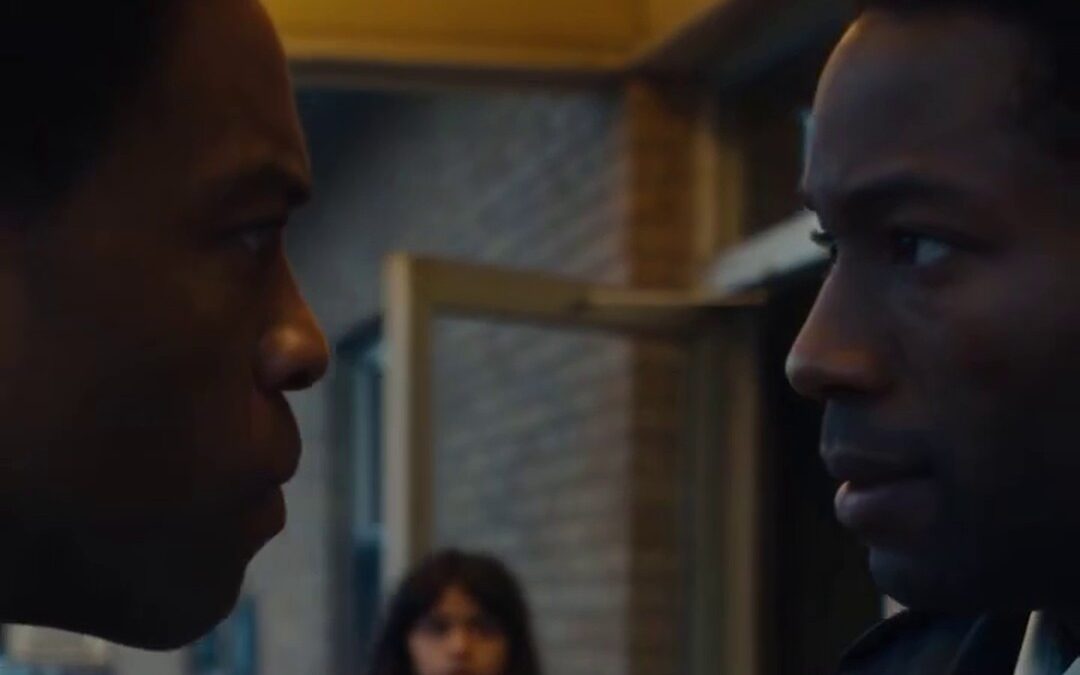
Chapter 2: The Name on the Route
Daniel kept his headlights off for half a block.
The gray sedan turned behind the park, passed a closed laundromat, and stopped near a brick building with a blue awning.
The girl ran through the side entrance.
The sedan continued.
Daniel wrote down its plate before it disappeared into traffic.
Then he parked beside the curb and called Ethan.
“Where are you?”
“Home.”
“Tell me the truth.”
Silence filled the call.
“Dad, did you follow me?”
“Yes.”
Another silence.
“Is she safe?”
Daniel looked at the blue awning.
“I don’t know.”
“Then don’t leave.”
The call ended.
Daniel stood outside the building, feeling the old panic that had followed Rebecca’s death into every room of his life.
He had spent four years protecting Ethan by measuring everything.
School hours.
Driving times.
Dinner receipts.
The exact number of minutes between a missed call and a returned one.
Measurement had felt like love when grief made every unknown unbearable.
Now his son was twelve, lying about school, carrying stolen cash, and asking whether a frightened girl was safe.
Daniel called the number on the building’s sign.
A woman answered after three rings.
“Juniper House youth office.”
“I’m Daniel Carter.”
“Which Daniel Carter?”
“The father of a boy named Ethan.”
The woman paused.
“Is Ethan in trouble?”
“I’m trying to determine that.”
“That answer usually means he is.”
“Do you know a girl who waits at the park near Fifth and Alder?”
“If you’re asking about another child, I can’t discuss her.”
“I’m not asking for records.”
“You’re asking for enough information to identify her.”
Daniel glanced at the building.
“A gray sedan approached her.”
“Did it touch her?”
“No.”
“Did the driver threaten her?”
“I couldn’t hear.”
“Then you have an observation, not a fact.”
The woman’s voice was calm, almost stern.
“My name is Lena Ortiz, and I coordinate the Juniper House after-school program.”
“Can I speak with Ethan?”
“If he is enrolled, he can speak with you during program hours.”
“He’s not enrolled.”
“Then I cannot confirm anything about him either.”
Daniel swallowed his irritation.
“My son may be bringing food here.”
“That would be a good thing if it were voluntary and safe.”
“He’s twelve.”
“Which is why adults need to be careful before turning kindness into an investigation.”
Daniel looked through the glass door.
A bulletin board displayed bus maps, tutoring schedules, and small cards marked emergency contacts.
A yellow floral sticker appeared on one card.
“Do you know the driver of a gray sedan?”
“I know several people who drive gray sedans.”
“This man made a girl afraid.”
“Children can be afraid of a parent, a caseworker, a stranger, or someone who reminds them of something.”
“What should I do?”
“Go home and talk to your son without accusing him of saving somebody.”
Daniel returned to his car.
The exact advice made him trust Lena less.
It also made him call Rosa.
“Is Ethan home?”
“Upstairs,” Rosa said.
“Please stay with him until I arrive.”
“Daniel, you sound like the house is on fire.”
“I followed him.”
“Ah.”
The single syllable carried four years of Rosa’s opinions.
When Daniel arrived, Ethan was sitting at the kitchen table with the foil from his sandwich folded into a neat square.
His backpack rested on the floor.
Daniel placed the plate between them.
“Start with the truth.”
Ethan stared at the foil.
“Her name is Maya.”
“Last name?”
“I don’t know if I’m allowed to tell you.”
“That depends on whether someone is hurting her.”
“You keep saying that like you already decided.”
Daniel leaned back.
“Why did the sedan scare her?”
“I don’t know.”
“Ethan.”
“I don’t know everything about her.”
“What do you know?”
“She comes to the park after school.”
“Why?”
“Because Juniper House is close, and they give kids a place to wait.”
“Then why doesn’t she go inside?”
“She does sometimes.”
“Sometimes?”
“She says the sign-in person asks too many questions.”
Daniel looked at the backpack.
“What questions?”
“Where she lives.”
“That is a normal safety question.”
“She doesn’t have one place.”
Daniel’s anger shifted, but did not disappear.
“Did you take money from my drawer?”
Ethan’s face closed.
“I was going to pay it back.”
“That was not my question.”
“Yes.”
“How much?”
“Forty dollars.”
Daniel opened the drawer and found the cash envelope beneath the measuring tape he used to mark commercial spaces.
“Why didn’t you ask me?”
“Because you would say no.”
“You don’t know that.”
“You said no when I asked for the robotics fee.”
“That was three hundred dollars.”
“I asked for twenty-five.”
Daniel remembered the argument.
He had been late for a closing, Ethan had been holding a broken gear assembly, and Daniel had said, “We can discuss it when things settle down.”
Things had not settled down.
“You could have asked Rosa.”
“She would have told you.”
“Yes.”
“That’s why.”
Daniel rubbed his forehead.
“What did the money buy?”
“Food.”
“You already packed food.”
“For her.”
“You gave her cash too.”
“For the laundromat.”
Daniel waited.
“She has a younger brother,” Ethan said.
“Where is he?”
“I don’t know.”
“Ethan, you cannot hand money to a child and assume you understand her situation.”
“I didn’t assume.”
“Then tell me.”
Maya had first appeared three weeks earlier when Ethan stayed after school to finish a model bridge for science.
The school’s student-support office kept a community directory beside the nurse’s door.
Juniper House was listed under “safe after-school waiting spaces.”
Ethan had gone there because he needed a bathroom and because Maya was sitting outside with a backpack that looked too heavy.
He had offered her an apple.
She had said she was not hungry.
Then she had asked whether St. Augustine gave out bus passes.
Ethan had told her no.
He had not told her that his father owned a company.
He had not told her that Daniel could call someone.
“She said adults always want the whole story before they help with one part,” Ethan said.
Daniel looked toward the hallway where Rebecca’s photographs remained in silver frames.
“Did she say who the man was?”
“Her dad, I think.”
“You think?”
“She calls him Ray.”
“Was Ray in the sedan?”
“I don’t know.”
“You were there.”
“I was behind the bench.”
“Why didn’t you come to me?”
Ethan’s eyes flashed.
“Because you’d call the police.”
“If a child is being threatened, I might.”
“She said if anybody called, he’d take her brother and leave.”
Daniel went still.
“Did she say that exactly?”
“She said, ‘He’ll move us before anyone can find us.’”
“That matters.”
“I know.”
“Where is her mother?”
“I don’t know.”
“What does Maya want?”
“She wants to keep going to school.”
Daniel stared at him.
“She’s enrolled?”
“I think so.”
“Which school?”
Ethan shook his head.
“She said Ray makes her miss days.”
Daniel stood.
“I’m calling Juniper House.”
“No.”
“Ethan.”
“You can ask whether she’s safe without using her name.”
“Then I’ll do that.”
“No, because if Lena knows I told you, Maya won’t trust me.”
“You are twelve.”
“I know.”
“Adults are responsible for this.”
“Then be one.”
The words landed harder than Daniel expected.
Rosa came in carrying a mug of tea.
“Both of you are right enough to be dangerous,” she said.
Daniel sat again.
The next morning, he drove Ethan to St. Augustine instead of taking him to the office.
At the academy’s administrative office, Assistant Principal Karen Holt met them beside a wall of laminated attendance charts.
“You called yesterday,” Holt said.
“I need to ask about Juniper House.”
“If this concerns another student, I’m limited in what I can tell you.”
“I’m not requesting a file.”
“Good.”
Daniel glanced at Ethan.
“Was there a school notice directing students to the program?”
Holt nodded.
“The district partners with Juniper House for supervised after-school access.”
“Does that include students who are not enrolled there?”
“Students can walk in during posted hours, but staff follow intake procedures.”
“What procedures?”
“Emergency contact, preferred name, transportation needs, and whether the child has a safe adult for pickup.”
“Would a child be removed for refusing an answer?”
“Not automatically.”
“Would the school call a parent?”
“If the child identifies as a student here or asks for help.”
Daniel felt a pressure behind his ribs.
“Has a girl named Maya used that program?”
Holt gave him a measured look.
“I cannot confirm that.”
“I’m trying to understand whether my son put her at risk.”
“Then talk to the program coordinator and your son.”
“I’m doing both.”
“Then don’t turn a community resource into a police interview.”
Ethan looked at her.
“Ms. Holt, what happens if a kid says they don’t feel safe going home?”
“The counselor follows district safety protocol.”
“Does that mean police?”
“Not automatically.”
“What does it mean?”
“It means a trained adult asks more questions and decides whether there is a reportable concern.”
Holt crouched slightly so she was closer to Ethan’s eye level.
“You can always tell me if someone is threatening you.”
Ethan nodded.
He still did not speak.
In the parking lot, Daniel saw the gray sedan across the street.
Its windshield reflected the morning sun.
He wrote down the plate again.
This time he recognized the last three characters.
They matched the plate he had recorded the previous afternoon.
“Dad,” Ethan said, “don’t walk over there.”
“I’m not.”
“You’re thinking about it.”
“I’m thinking about calling the police.”
“On what?”
Daniel looked at the sedan.
“That’s the problem.”
The sedan pulled away before he could photograph the driver.
At the office, Daniel searched the state vehicle database through a licensed commercial service his firm used for property-management vendors.
The plate returned to a gray 2018 Toyota registered to Raymond Vale.
The address was an apartment complex six miles from Juniper House.
Daniel printed the record.
He then called the nonemergency police line.
An officer named Priya Shah met him at a coffee shop near the academy.
Daniel showed her the plate number and explained what he had seen.
Officer Shah listened without reaching for the paper.
“Did the driver touch the girl?”
“No.”
“Did he block her path?”
“No.”
“Did he say anything you could hear?”
“No.”
“Did the girl run toward a safe location?”
“She entered Juniper House.”
“That is useful context.”
“Can you check Raymond Vale?”
“We can document a suspicious-contact report, but we cannot investigate a person solely because a child looked frightened.”
“I understand.”
“Do you?”
Daniel disliked the question because he did not.
Officer Shah continued.
“If there is a custody order, an active protection order, or a missing-person report, a plate may matter.”
“Can you tell me whether there is one?”
“Not about a child who is not yours.”
“I have a son involved.”
“Your son can report what he knows.”
“He is afraid of causing trouble.”
“Then start with the program.”
“I did.”
“Start again, but listen to what they can legally say.”
Daniel left with a card and no warrant, no flashing lights, and no answer.
That afternoon, he returned to Juniper House alone.
Lena Ortiz met him in a narrow office with two donated computers and a jar of wooden pencils.
“I spoke with Ethan,” Daniel said.
“Did you listen to him?”
“I’m trying.”
“That is not the same thing.”
“Do you know Raymond Vale?”
Lena folded her hands.
“I know a man by that name has attempted to contact a child who uses this program.”
“Attempted?”
“That is all I can say without the child’s consent or a safety exception.”
“Is Maya in immediate danger?”
“I cannot answer that directly.”
“I am not asking for her records.”
“You are asking me to reassure you without giving you facts.”
Daniel felt his voice sharpening.
“My son is taking money from my house because he thinks he has to feed her.”
“Then your son needs boundaries.”
“I agree.”
“And Maya needs adults who will not make her survival dependent on a twelve-year-old’s secrecy.”
“Then why let him keep helping?”
“We did not authorize him to provide cash.”
“Did you know?”
“We knew he brought food.”
“When?”
“Last Thursday.”
Daniel’s stomach tightened.
“Why didn’t you tell me?”
“Because he was not registered in our program, and we had no basis to call you unless he was unsafe.”
“He was lying to me.”
“That is a family issue.”
“He was carrying cash to another child.”
“We told him not to.”
“Did you tell Maya’s caregiver?”
Lena’s expression changed slightly.
“Which caregiver?”
Daniel heard the question inside the question.
“What does that mean?”
“It means there are adults involved, but not all adults have the same authority.”
“Is Raymond Vale her father?”
“I cannot confirm family relationships.”
“Then I need to know whether he is dangerous.”
“You need to know what he has done.”
“Has he threatened her?”
“I cannot tell you.”
“Because of privacy?”
“Because children deserve a chance to speak before adults build a story around them.”
Daniel stepped toward the window.
A board near the door held transportation cards.
One card was a faded yellow plastic bus pass inside a clear sleeve.
A floral sticker covered the corner.
“Why does that look familiar?” Daniel asked.
Lena followed his gaze.
“It belongs to our emergency transit kit.”
“Who put the flower on it?”
“One of the children.”
“Which one?”
Lena did not answer.
Daniel took out his phone and called Ethan.
The call went to voicemail.
He called again.
This time Ethan answered, whispering.
“Where are you?”
“Library.”
“Why are you whispering?”
“Because I’m with Maya.”
Daniel closed his eyes.
“Put Lena on the phone.”
“She’s not here.”
“Where are you exactly?”
“Juniper House.”
“Then why did you say library?”
“Because I thought you would come get me.”
“I am coming.”
“Dad, don’t.”
“Ethan, stay inside.”
“Ray is here.”
Daniel felt every sound in the office disappear.
“Is he inside?”
“No.”
“Where are you?”
“Back stairwell.”
“Why are you in a stairwell?”
“Maya saw him through the side door.”
“Get to Lena or another staff member.”
“She says not to move until he leaves.”
“Who says?”
“Maya.”
Daniel looked at the bus pass.
The yellow flower was shaped like the one sewn inside Rebecca’s recipe box.
It was not the same flower.
It was a daisy.
Rebecca’s had been a marigold.
Daniel drove too fast and forced himself to slow at the next intersection.
He called Lena while moving through traffic.
“Raymond Vale is outside,” he said.
“Where are Ethan and Maya?”
“Back stairwell.”
Lena’s voice changed from guarded to operational.
“Stay outside and do not approach him.”
“My son is inside.”
“I’m bringing staff to the stairwell.”
“Call the police.”
“I already have.”
“Why did you wait?”
“Because I needed to confirm the location and keep the children from crossing his path.”
Daniel reached the building as a patrol car turned onto Alder Street.
Raymond Vale stood beside the gray sedan.
He was in his late thirties, wearing a postal-service jacket over a white shirt.
He held a cardboard folder against his chest.
When he saw Daniel, he lifted one hand.
“Mr. Carter?”
Daniel stopped near the sidewalk.
“Do you know my name?”
“Your son gave it to me.”
“Where is Maya?”
“Inside, I hope.”
“Why are you here?”
“Because she has my daughter.”
Daniel heard the words and distrusted them.
“Your daughter?”
“Her brother.”
“Ethan doesn’t have anyone.”
“Ethan has a twelve-year-old’s version of a situation.”
Raymond looked toward the building.
“His friend took my son from the bus stop three weeks ago.”
“Why would she do that?”
“Because she believed I was going to send him away.”
“Were you?”
Raymond’s jaw tightened.
“I was taking him to his aunt.”
“That is not the same as keeping him.”
“It was temporary.”
“Why didn’t you tell the school?”
“Because Maya had already told the school I was dangerous.”
“Are you?”
Raymond looked at him.
“I have made mistakes.”
“That wasn’t my question.”
“No.”
The patrol car stopped.
Officer Shah stepped out.
“Mr. Carter, move behind me.”
Raymond raised both hands.
“I’m not here to cause trouble.”
Officer Shah approached him.
“Mr. Vale, did you attempt to enter Juniper House?”
“No.”
“Did you speak to anyone inside?”
“No.”
“Why are you here?”
“To retrieve my son.”
“Do you have legal documentation?”
Raymond opened the cardboard folder.
“I have a temporary placement order from family court.”
Officer Shah did not take it.
“Keep your hands visible.”
“I understand.”
Daniel watched the building’s side door.
Lena appeared with Ethan behind her.
Maya stood close beside them, still clutching the floral backpack.
Raymond saw her and took one step forward.
Maya flinched.
Officer Shah raised her hand.
“Stop there.”
Raymond stopped.
“Maya,” he said, “I’m not going to touch you.”
Maya’s voice was thin.
“You said you’d take Toby before anyone could stop you.”
“I said your aunt could keep him while the caseworker reviewed the apartment.”
“You packed his clothes.”
“Because the caseworker told me to.”
“You lied.”
“I panicked.”
Daniel looked at Lena.
“Who is Toby?”
“Maya’s seven-year-old brother,” Lena said.
“Where is he?”
“At the hospital.”
The words struck Daniel differently from everything else.
“Why?”
“He has severe asthma,” Lena said.
Raymond’s folder sagged in his hands.
“The ambulance took him from school yesterday.”
Maya stepped forward.
“He was breathing like a whistle.”
Raymond looked at her.
“I know.”
“You left.”
“I followed the ambulance.”
“You left me at the park.”
“I thought you were with Lena.”
“I wasn’t.”
Raymond’s face changed.
Not guilt exactly.
Something more exhausted.
Officer Shah asked, “Mr. Vale, is there an emergency custody hearing scheduled?”
“Tomorrow morning.”
“Do you have an attorney?”
“No.”
“Then you need to speak with the family-court help desk.”
“Can I see my son?”
“That is not my decision.”
Raymond looked at Daniel.
“Your boy has been helping Maya because she thinks I’m trying to take Toby.”
“Are you?”
“I’m trying to keep him alive.”
Maya shook her head.
“You were going to send us to Aunt Carla.”
“Because the housing inspector said our apartment was unsafe.”
“Then why didn’t you fix it?”
Raymond looked down at the pavement.
“Because I’m behind on rent and the landlord won’t repair the mold until the inspection is closed.”
Daniel heard the shape of the larger crisis.
Not a kidnapping.
Not a stranger hunting a girl.
A family split between asthma, housing, school absences, and a father who had chosen secrecy because every official conversation felt like a verdict.
That did not make Raymond harmless.
It made the facts harder.
Officer Shah spoke to Lena.
“Can you verify the children’s identities through your system?”
“I can verify that both are known to us.”
“Can you confirm the hospital?”
“With Raymond’s consent, yes.”
Raymond nodded.
Lena made a call.
While she spoke, Daniel turned to Ethan.
“Did you know Toby was in the hospital?”
“Not until today.”
“Why didn’t you tell me?”
“Because Maya said if Ray found out we told, he’d take Toby away.”
“That fear may have been understandable.”
Ethan’s shoulders lowered.
“It doesn’t make the stealing acceptable.”
“I know.”
“You lied to me for three weeks.”
“I know.”
“You used my money.”
“I know.”
“Then say what you did.”
Ethan swallowed.
“I took forty dollars from your drawer and gave some to Maya for food and the bus.”
“Did she ask you to steal it?”
“No.”
“Did anyone else?”
“No.”
“Did you keep any?”
“No.”
Daniel nodded once.
“You will pay it back.”
“I can work.”
“You can do supervised chores, and we’ll talk about the robotics fee.”
Ethan blinked.
“Really?”
“After we deal with this.”
Maya looked toward them.
“Is he in trouble?”
“Yes,” Daniel said.
Ethan looked at her.
“But not because he helped you.”
Daniel held his son’s gaze.
“Both things can be true.”
Lena ended her call.
“Toby is at St. Anne’s pediatric unit.”
Raymond exhaled.
“The hospital social worker documented the asthma attack.”
“Can you access that?”
“Not without a release.”
Raymond reached for the folder, then stopped.
“I have the discharge paperwork.”
Officer Shah read the top page from a distance.
“Mr. Vale, do not move toward the children while we sort out the court order.”
“I won’t.”
Daniel asked Lena, “What exactly did Maya tell your staff?”
“Only that she was afraid Raymond would separate them.”
“Did she say why?”
“She said her father had packed Toby’s clothes and changed his bus route.”
Raymond spoke quietly.
“The route changed because the school nurse told me the old bus stop was too far from the hospital.”
Maya’s eyes narrowed.
“You didn’t tell me.”
“You were at Juniper House when the nurse called.”
“You could have waited.”
“I thought you would run.”
“I did.”
Raymond closed his eyes for a moment.
The police did not arrest him.
They documented the contact, confirmed he remained outside the building, and advised him not to approach Maya before the court hearing.
Officer Shah asked Daniel whether he wanted to make a complaint about the cash.
Daniel said yes.
Ethan’s face went white.
Daniel touched his shoulder.
“A complaint is not a punishment.”
“It sounds like one.”
“It creates a record.”
“Will they take me away?”
“No.”
Officer Shah explained that because Ethan was a minor and the amount was forty dollars, the department would document the theft and could refer the family to a youth officer or diversion program rather than treat it as a criminal case.
Daniel listened.
The adult-sized problem had not become smaller.
It had become more specific.
That evening, Daniel and Ethan sat in the kitchen while Rosa made rice and beans.
Daniel placed forty dollars on the table.
“This is not your repayment.”
Ethan stared at the bills.
“It’s what you gave away,” Daniel said.
“I don’t have it.”
“I know.”
“Then why put it there?”
“Because we are going to return it to the drawer after we decide what happens next.”
Ethan frowned.
“Why?”
“Because I want you to see that the money is mine, and that helping someone does not give you permission to take it.”
“Will you stop me from helping?”
“I will stop you from carrying adult responsibility alone.”
Ethan looked at the bills.
“What does that mean?”
“It means we find out what Maya wants, what Lena can offer, and what her father is legally allowed to do.”
“And if nobody helps?”
“Then we keep asking.”
“You don’t usually keep asking.”
Daniel absorbed that.
“I am learning.”
Rosa set down three bowls.
“Your father is very good at asking when he wants a lease signed.”
Ethan almost smiled.
“He hates asking when he wants help.”
Daniel looked at Rosa.
“Is that true?”
“You hired me to clean your house after Rebecca died because you said hiring help was more efficient than accepting help.”
“It was.”
“It was also sad.”
Ethan looked between them.
Daniel picked up his spoon.
“Your mother would have asked three people before breakfast.”
“She also had less fear of being annoying,” Rosa said.
Daniel remembered Rebecca’s voice from a grocery-store parking lot four years earlier.
You keep calling control a plan, Daniel.
He had hated the sentence because it was accurate.
The next morning, Daniel took unpaid time from his firm and went with Ethan to family court’s help desk.
He could not represent Raymond.
He could not access Maya’s records.
He could, however, help Ethan understand the difference between a custody dispute and a rescue fantasy.
A legal-aid attorney named Marisol Vega spoke with Raymond in a nearby room.
Daniel waited with Lena and Ethan.
“Why are you helping him?” Daniel asked.
Marisol kept her eyes on the intake form.
“Because he has a hearing and no lawyer.”
“You believe him?”
“I believe he needs due process.”
“That isn’t the same thing.”
“No.”
“Do you think he should keep custody?”
“I have not reviewed the evidence.”
Daniel nodded.
The answer reassured him more than certainty would have.
A bailiff called the case.
Maya sat beside Lena.
Raymond sat at the other table with Marisol.
Toby’s hospital social worker joined by video.
The judge did not make a permanent ruling.
She reviewed the temporary placement order, the hospital record, the school attendance report, and the housing inspection notice.
Raymond had not kidnapped Toby.
He had signed the hospital release as his father.
He had not been ordered to surrender the children.
He had been told to provide safe housing and cooperate with services.
The court appointed a child advocate for Maya and Toby and ordered a home-safety review.
It allowed Raymond supervised contact with Maya at Juniper House.
It allowed Maya to remain with Lena’s approved emergency host for seventy-two hours while the housing issue was assessed.
Daniel watched Maya listen.
She did not look relieved.
She looked like someone who had finally been given a choice between two frightening options.
The judge asked her advocate what Maya wanted.
The advocate said Maya wanted to stay with her brother and continue at her school.
She also wanted her father to stop changing plans without telling her.
The judge ordered a written transition plan.
Raymond lowered his head.
After the hearing, Maya approached Ethan first.
“You should have told me your dad was coming.”
“I thought you’d run.”
“I did run.”
“Sorry.”
“You can still help with food.”
Ethan glanced at Daniel.
“Only if my dad knows.”
Maya studied Daniel.
“Would you have said no?”
Daniel answered honestly.
“I might have asked questions before saying yes.”
“That is why I didn’t want him to know.”
“That was not a good reason to steal.”
“I know.”
Maya hugged her backpack.
“Ray isn’t trying to hurt us.”
Daniel looked at her.
“Are you saying that because you’re afraid of what happens if you don’t?”
Maya’s chin lifted.
“No.”
“Then why?”
“Because I know when he is scared.”
“Does he scare you?”
“Sometimes.”
“Those can both be true.”
Maya looked toward Raymond.
“He gets quiet before he makes a bad choice.”
Daniel recognized the description.
He had watched himself become quiet before signing contracts, canceling dinners, and following Ethan to the park.
The difference was that Daniel’s bad choices had mostly worn clean shirts.
At Juniper House, Lena held a meeting with Daniel, Ethan, Maya, Raymond, Marisol, and the school counselor.
The center’s policy did not allow children to become informal couriers between adults.
Lena said it plainly.
“Maya cannot use Ethan to carry money, messages, or plans.”
Maya folded her arms.
“I didn’t ask him to steal.”
“I know.”
“He brought food.”
“And food can continue through the pantry, not through a secret arrangement.”
Ethan said, “I can pack extra.”
“You can pack extra after your father agrees.”
Daniel nodded.
“I agree.”
Raymond looked at him.
“Why?”
“Because children should eat.”
Raymond’s expression tightened.
“That sounds simple.”
“It is not.”
“No, it isn’t.”
Lena slid a consent form across the table.
“The food-pantry program can provide weekly bags for both households if the adults complete intake.”
Raymond laughed once without humor.
“I make too much for the emergency pantry and too little for the rent.”
“The intake is based on household need,” Lena said.
“Will they report me?”
“They record the application.”
“To whom?”
“To the pantry, not immigration, not the police, and not the school.”
Raymond looked at Marisol.
“That is accurate.”
Daniel noticed the man’s fingers trembling against the table.
“What does your lease say about the mold?” Daniel asked.
Raymond glanced up.
“Why?”
“Because I manage commercial properties, not apartments, but I know an ignored repair becomes leverage when an inspector gets involved.”
“You think I don’t know that?”
“I think you have been fighting three emergencies with one phone.”
Raymond’s face hardened.
“You don’t know me.”
“No.”
“Then don’t make me a project.”
Daniel accepted the rebuke.
“I’m not offering to buy your building or your family.”
“Good.”
“I’m offering to help you organize the inspection documents if you want.”
Raymond looked at Marisol.
She said, “That could be useful, if it remains separate from custody decisions.”
Daniel nodded.
“Separate.”
Raymond looked at him for a long time.
“Why?”
“Because my son was right about one thing.”
“What?”
“Adults should be responsible for adult problems.”
The school counselor opened a folder.
“Raymond, we have attendance concerns from Maya and Toby’s school.”
“I know.”
“Some absences were marked unexcused.”
“Because the bus route changed.”
“The attendance clerk did not have that information.”
Maya looked at her father.
“Why didn’t you tell them?”
“Because I thought the hospital discharge was enough.”
“It wasn’t,” the counselor said gently.
She explained that the school could correct the absences if Raymond provided the discharge paperwork and the updated transportation notice.
The clerk had marked Maya absent because she had not been at the stop listed in the old system.
The gray sedan had appeared near the park on two afternoons because Raymond had been driving to the old stop, searching for her after she stopped coming home.
That explained his presence.
It did not erase Maya’s fear.
When Daniel asked why Raymond had never simply walked into Juniper House, Raymond answered.
“Because Lena told me not to enter while Maya was inside.”
Lena nodded.
“He called twice.”
“Why didn’t you tell me?” Daniel asked.
“I didn’t know you.”
“You knew Ethan was involved.”
“I knew Ethan was a child who needed protection from adult conflict.”
Daniel had no answer.
The decisive question remained.
Why had Maya believed Raymond would take Toby?
Marisol found the answer in the temporary placement order.
The order required Raymond to produce proof of safe housing within ten days.
If he failed, Toby could remain temporarily with his aunt Carla.
Raymond had packed Toby’s clothes because he expected that possibility.
He had changed the bus route because the hospital social worker had warned that Toby could not walk from the old stop during an asthma flare.
He had concealed the housing inspection because he feared Maya would run before the hearing.
His secrecy had created the very flight he feared.
That was the second mystery.
The gray sedan was not a predatory stranger’s vehicle.
It belonged to a father whose desperate secrecy had made him look like one.
But the story did not end with explanation.
The housing inspection found mold around a leaking bathroom vent and a broken window latch.
The landlord received a written notice.
Raymond could not repair the property himself without violating the lease.
Marisol helped him request emergency relocation assistance.
Daniel helped only with the paperwork and transportation.
He did not pay the rent.
He did not call the landlord as a powerful client.
He did not promise a house.
Six days later, the school corrected Maya’s absences after receiving the hospital discharge paperwork and the transportation notice.
The district transportation office restored the original bus stop temporarily and added a note that Maya could be picked up at Juniper House by an approved adult.
Raymond signed the authorization.
Maya signed nothing.
Her advocate explained each part to her.
She chose Lena as the pickup contact.
She chose to see Raymond twice that week.
She chose not to ride in the gray sedan.
Those choices remained hers.
Ethan apologized to the academy’s office for falsely naming Mr. Reynolds.
The assistant principal assigned him three afternoons of supervised study and a meeting with the counselor.
Daniel returned the forty dollars to the kitchen drawer, then removed the envelope from the drawer entirely.
He opened a checking account for household expenses and gave Ethan a small, supervised allowance.
The first week, Ethan repaid five dollars from chores.
The second week, he repaid seven.
Daniel kept the receipt in a folder labeled “Trust.”
Rosa saw it and shook her head.
“That is a dramatic label.”
“I’m tracking progress.”
“You are tracking money.”
Daniel changed the label to “Things We Mean.”
Rosa approved.
At the next Juniper House meeting, Ethan brought two sandwiches.
Daniel watched him place one in a paper bag marked with his own name.
Maya came through the door with a yellow plastic transit card clipped to her backpack.
The floral sticker was gone.
Someone had replaced it with a blue star.
“Where did the flower go?” Ethan asked.
“Maya took it off,” Lena said.
Maya touched the card.
“I’m not hiding anymore.”
Raymond arrived ten minutes later, carrying a folder of housing forms.
He stopped at the entrance.
Maya decided whether to wave.
After a moment, she did.
Raymond waved back.
He did not cross the room until she invited him.
Daniel stood beside Ethan near the pantry shelves.
“You see that?” Ethan asked.
“What?”
“She invited him.”
“Yes.”
“You look surprised.”
“I’m trying not to be.”
Ethan picked up a can of peaches.
“Can we bring these to the pantry?”
“After we sign them out.”
“I know.”
Daniel handed him the clipboard.
Ethan wrote his name carefully.
Then he added the number of cans.
Daniel noticed the handwriting was steadier than it had been at the kitchen table.
Outside, the gray sedan waited at the curb.
Maya saw it through the window.
Her shoulders tightened.
Raymond noticed and stayed where he was.
Lena asked, “Do you want him to move the car?”
Maya looked at Raymond.
“Can you park where I can see you?”
Raymond nodded.
He moved the sedan to the space beside the front window.
Maya watched him do it.
No one told her what the gesture meant.
No one decided for her whether fear had become trust.
Daniel walked Ethan home before sunset.
At the kitchen drawer, Ethan placed five dollars inside the empty envelope.
“It’s not the whole forty,” he said.
“I can count.”
“I’ll finish.”
“I know.”
Ethan looked at the drawer.
“Can I ask you something?”
“Yes.”
“Did Mom ever help people like that?”
Daniel thought of Rebecca’s recipe box, her crowded calendar, and the marigold stitched into the lining.
“She helped without pretending the rules didn’t matter.”
“That sounds like you.”
“It sounded more like her.”
Ethan smiled.
Daniel opened the drawer and found the old recipe box behind the cash envelope.
The marigold inside the lid had loosened at one corner.
He had kept it there because Rebecca had sewn it during a winter when money was tight and their kitchen table was covered with unpaid bills.
He had forgotten that the flower was not a symbol of mystery.
It was a patch.
A small repair made because something had torn.
Daniel took the box to the table.
Ethan sat across from him.
“You can help me fix it,” Daniel said.
“With money?”
“With the thread.”
Ethan found a needle in Rosa’s sewing tin.
Together, they stitched the marigold back into place.
The next afternoon, Daniel drove them to Juniper House.
He did not follow anyone.
He did not park across the street.
He signed the visitor log with his full name and waited while Ethan carried the food inside.
Maya met them at the pantry door.
She took the bag, then handed Ethan a folded paper.
“What’s this?” he asked.
“A bus schedule.”
“Why?”
“So you don’t have to lie about where I am.”
Daniel looked at the route printed in blue ink.
The schedule had a yellow flower drawn in the corner.
Maya caught him looking.
“It’s not a secret,” she said.
Daniel nodded.
“Then we’ll treat it like something true.”
Ethan tucked the schedule into his backpack.
Daniel placed his hand on the door of the car and looked toward the curb.
The gray sedan waited where Maya could see it, and this time nobody had to run.