She Unlocked the County Ledger and Found a Forged Eviction Notice That Could Take an Eighty-Year-Old Widow’s Home Forever
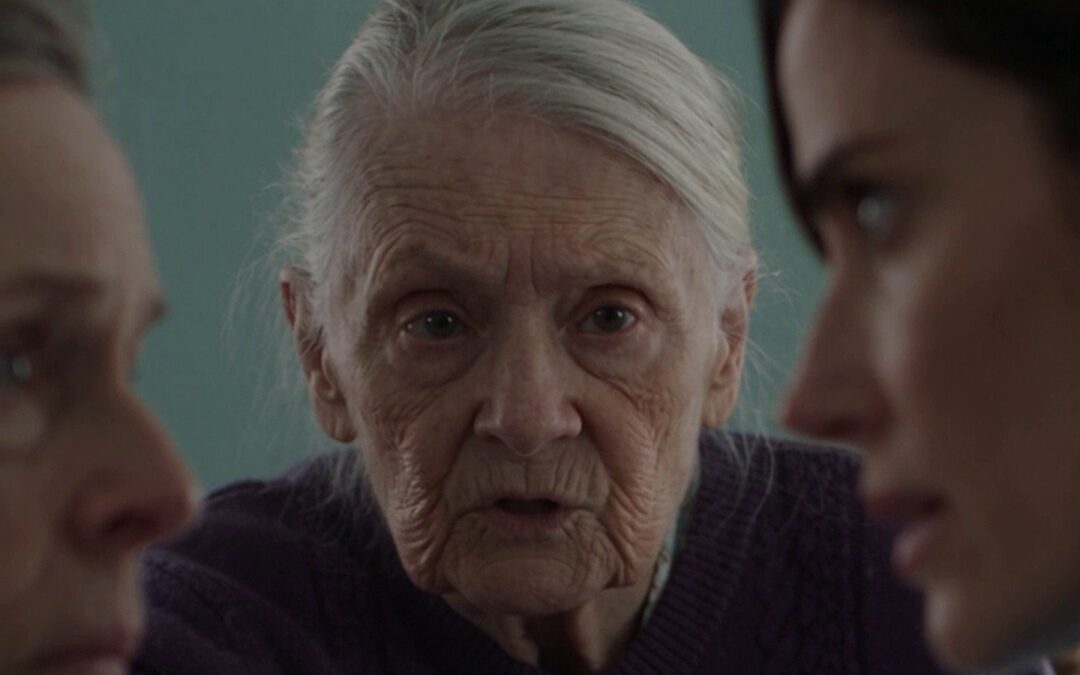
Chapter 1: The Name on the Door
Mara Velez was halfway through locking the county records office when a man slipped a folded eviction notice beneath the glass.
“Please,” he said. “They changed the parcel number.”
Behind him, rain blurred the courthouse steps. Mara unfolded the paper and saw the blue ink before she read the name. Her father had taught her that county records never lied, but people often made them lie for a while.
The notice belonged to a house on Juniper Street, occupied by an eighty-year-old widow named Ruth Bell. The signature authorizing the transfer was Mara’s own.
She looked up. “Who gave you this?”
“Mr. Kessler’s office.”
Kessler was the county assessor, Mara’s supervisor, and the man who had warned her that temporary clerks did not question permanent decisions.
The stranger pointed through the window. Across the street, Kessler stood beneath an umbrella, watching.
Mara folded the notice again. Inside the records room, the old brass ledger cabinet waited in the dark. Her father’s handwriting still marked its drawers.
She locked the front door, then unlocked it.
“Come inside,” she said.
At that moment, Kessler’s phone began ringing.
Chapter 2: The Blue Ledger
The stranger hesitated on the courthouse steps as though the rain itself had become a locked gate.
Mara held the door open.
“Inside,” she repeated.
He glanced toward the street. Kessler was still there, his umbrella tilted against the weather, one hand tucked into the pocket of his gray overcoat. The assessor did not wave. He did not need to. His presence had always worked like a hand resting lightly on the back of Mara’s neck.
The stranger stepped into the lobby.
He was younger than she had first thought, perhaps thirty-five, with wet hair plastered to his forehead and a canvas tool bag hanging from one shoulder. A thin red cut crossed his knuckle. He carried himself like someone used to lifting things alone.
Mara closed the door and turned the dead bolt.
“What’s your name?” she asked.
“Elias Bell.”
The name struck her before she understood why.
“Ruth Bell’s grandson?”
He nodded.
Mara looked again at the notice. The paper was official, printed on county stock, stamped with the assessor’s seal. The address read 414 Juniper Street. Parcel number 08-17-442. Owner of record: Ruth A. Bell.
But beneath that, in the transfer section, the owner had changed to Kessler Development Holdings.
The authorization line carried Mara’s name in blue ink.
She touched the signature with one finger.
“I didn’t sign this.”
“I know.”
“You brought this here because you know?”
“My grandmother brought it to me. She said you would know what it meant.”
Mara studied him. “Why would she say that?”
“Because your father helped her keep the house once.”
The rain ticked against the tall windows. The lobby smelled of wet wool, dust, and the lemon cleaner the night staff used on the marble floor. Behind Mara, the records room waited with its rows of gray shelves and locked cabinets.
Her father had died eight months earlier. Since then, people had spoken of him in careful fragments: reliable, stubborn, difficult near the end. Nobody had mentioned Ruth Bell.
Mara folded the notice and slid it under the counter.
“Your grandmother needs to be out by Friday?”
“Friday at noon. They’ll bring a crew to clear the place.”
“Has she received a court order?”
“Only this.”
“That isn’t a court order.”
“It has the county seal.”
“It has a county seal.”
Elias looked at her, measuring the difference.
Outside, Kessler’s phone rang again. He answered it and turned away, but not before Mara saw his eyes move from Elias to the door behind her.
She lowered her voice. “Your grandmother must not hand over her keys.”
“She won’t. She says the house was never sold.”
“It may not have been.”
“Can you prove that?”
Mara looked toward the records room.
She had worked there for eleven years, first under her father and then under three different supervisors. She knew the public indexes, the plat books, the tax rolls, and the old microfilm machines that overheated in summer. She knew which cabinets stuck and which drawers had been relabeled after the courthouse renovation.
She also knew the rule Kessler had repeated that afternoon.
Do not reopen archived transfers without authorization.
At five forty-two, he had stood beside her desk while she entered routine property updates.
“You’re temporary until the budget vote,” he had said. “Temporary people don’t create paper trails.”
Mara had asked what he meant.
He had placed a stack of unsigned corrections in front of her.
“Just copy the information from the digital queue. If the system says a parcel changed hands, it changed hands.”
Now she took a key ring from beneath the counter.
“Wait here.”
Elias caught her sleeve. His fingers were cold.
“If he sees you looking—”
“He already sees me.”
She crossed the lobby. The records room door opened with a metallic groan. Fluorescent tubes flickered overhead, one after another, revealing shelves packed with deed books, tax maps, folded plats, and cardboard boxes labeled by year.
At the back stood the brass ledger cabinet.
Mara’s father had called it the blue cabinet, although its paint had long ago faded to the color of a winter sky. The top drawer contained old easement records. The second held handwritten transfer ledgers from before the county digitized its files. The third was supposed to be empty.
Mara inserted the key.
The lock resisted.
She tried again, then pressed her shoulder against the drawer and pulled. It opened with a dry wooden crack.
Inside lay three bound ledgers and a narrow envelope tied with blue thread.
She recognized the handwriting on the envelope immediately.
Mara.
She did not touch it.
A sound came from the lobby: the door handle turning.
“Ms. Velez,” Kessler called. “Are you still here?”
Elias stepped into the records room.
Mara held up a finger.
Kessler’s voice softened. “You should not be accessing historical material after hours.”
“I’m assisting a resident.”
“You’re allowing a resident into a restricted area.”
Elias moved toward the side aisle, but Mara shook her head. The room had only one public entrance. There was a service door at the rear, but its alarm had been disconnected during the renovation and the frame was blocked by boxes.
Kessler entered.
He removed his wet hat and placed it on the edge of a shelf. He was a broad man in his late fifties, with silver hair combed precisely back and a pleasant expression that never reached his eyes.
His gaze landed on the blue-threaded envelope.
“Step away from that drawer.”
Mara closed it halfway.
“Did you authorize this eviction notice?”
“I authorized a property transfer.”
“Using my name?”
“You processed the file.”
“I did not sign it.”
Kessler looked at Elias. “Mr. Bell, your grandmother’s situation is unfortunate, but she has been offered relocation assistance.”
“She wasn’t offered anything,” Elias said.
“She was mailed several notices.”
“To an address she hasn’t lived at for twenty years?”
Kessler’s expression remained smooth. “That is what the tax record shows.”
Mara looked at the transfer notice. “The owner’s address is wrong.”
“The parcel was sold.”
“Where is the deed?”
“In the archive.”
“Then let me see it.”
Kessler took one step forward. He did not raise his voice. That made the room feel smaller.
“You are not authorized to investigate my office.”
“I’m not investigating your office. I’m verifying a public record.”
“Your employment ends tomorrow.”
Elias flinched.
Mara did not. The statement had been waiting for her since the afternoon.
Kessler reached for the notice. Mara pulled it back.
His hand stopped in the air.
For the first time, the pleasant expression slipped.
“Give me the document.”
“No.”
The word surprised them both.
Kessler’s eyes narrowed. “You’re making a mistake.”
“Maybe.”
She slid the notice beneath the ledger on the shelf.
Kessler turned toward Elias. “And you’re trespassing.”
“The door was open.”
“It was locked.”
“You opened it.”
Kessler looked back at Mara. “You can lose your pension.”
“I don’t have a pension.”
“You can lose your references. Your apartment is financed through the county credit union, isn’t it?”
The threat was quiet, precise, and personal. Mara felt it settle behind her ribs.
Kessler knew about the loan because the county required employees to disclose financial obligations before handling tax records. Her father had warned her that information gathered for administration often became leverage in the wrong hands.
Elias saw her face change.
“What did he say?”
“Nothing you need to answer.”
Kessler smiled faintly. “Go home, Ms. Velez.”
He took the eviction notice from beneath the ledger before she could stop him.
Then he walked out.
The front door closed behind him. His footsteps receded across the marble lobby.
Elias stared at Mara.
“You said you could prove it.”
“I said it may not be valid.”
“He has the paper.”
“He doesn’t have the original.”
“Where is it?”
Mara looked at the blue cabinet.
The envelope remained inside.
She pulled it free.
The thread had been tied in the same double knot her father used on every bundle of important documents. Mara remembered sitting beside him as a child, sorting tax receipts at the kitchen table while he repaired the knots with his blunt, square fingers.
She untied it.
Inside was a photocopy of an old survey, folded around a small brass key.
The survey showed Juniper Street before the county widened it. The Bell property was marked in red pencil. Along the rear boundary, a narrow strip of land ran toward the river.
A handwritten note filled the margin.
The house is not the house.
Mara read it twice.
“What does that mean?” Elias asked.
She turned the page over. Nothing.
The brass key was stamped with the number 17.
“Do you know this?” she asked.
Elias shook his head. “My grandmother might.”
“Take me to her.”
“You just said not to hand over the keys.”
“I said she shouldn’t hand over her house. I didn’t say we couldn’t ask her questions.”
The rain had grown heavier by the time they left the courthouse. Kessler’s car was gone. Mara locked the front doors, checked the side entrance, and placed the blue-threaded envelope inside her coat.
Elias’s truck was parked beneath a sycamore tree. It was an old red Ford with one headlight clouded and a ladder strapped to the roof.
“Where do you work?” Mara asked as she climbed in.
“Restoration. Mostly old houses.”
“Your grandmother’s?”
“Until this week.”
He started the engine. The heater coughed out air that smelled faintly of dust.
Juniper Street lay four blocks west, where the city gave way to older houses and narrow lots. Rain ran along the gutters in brown streams. The homes stood close together, their porches sagging, their paint faded by river weather.
Ruth Bell’s house was pale green with white trim and a steep roof. A wooden wind chime hung beside the front door, silent in the storm.
The locks had been changed.
Elias tried his key. It turned halfway and stopped.
“Your grandmother inside?”
“At the neighbor’s. Mrs. Han lets her sleep there when the boiler acts up.”
He crouched beside the doorknob.
Mara watched him take a thin metal pick from his tool bag.
“You can open it?”
“Usually.”
“Is that legal?”
“Not if I’m breaking in.”
He worked the pick through the lock. His hand moved carefully, not hurried. After a moment, the dead bolt clicked.
He pushed the door open.
Inside, the house smelled of lavender, wet plaster, and old wood. Furniture had been pushed toward the walls. Cardboard boxes covered the dining room table. A red inspection sticker had been pasted to the boiler door.
Mara stepped into the hallway.
The first thing she noticed was the grandfather clock.
It stood against the far wall, stopped at 2:17.
“The house hasn’t had power since yesterday,” Elias said.
“Why 2:17?”
“It stopped when the crew cut the line.”
Mara looked at the clock face. The brass hands were fixed at two seventeen. The number echoed the key in her pocket.
Elias noticed her looking.
“That clock belonged to my grandfather. It’s been broken for years.”
“Your father?”
“Died before I was born.”
“Your grandmother ever mention a county survey?”
“Not to me.”
A floorboard creaked in the back room.
Elias turned sharply.
“Ruth?”
No answer.
He moved toward the sound. Mara followed.
They found Ruth Bell standing in the kitchen doorway, holding a saucepan in both hands as if it were a weapon. She was small, straight-backed, and eighty years old, with close-cropped white hair and a purple cardigan buttoned wrong at the throat.
Her eyes went immediately to Mara.
“You brought a Velez.”
“My name is Mara,” Mara said.
“I know your name.”
Elias stepped between them. “Grandma, this is about the notice.”
Ruth’s grip tightened on the saucepan.
“I told you not to touch it.”
“You told me to find her.”
“I told you to find her father.”
“He’s dead.”
“I know.”
The words landed without drama. Ruth lowered the saucepan.
Mara took out the brass key.
Ruth saw it and sat down.
For several seconds, the only sound was rain against the kitchen window.
“Where did you get that?” Ruth asked.
“My father left it in an envelope.”
Ruth looked toward the hallway clock.
“Then he finally decided to stop being afraid.”
Mara sat opposite her at the small kitchen table. Elias remained standing.
“What was my father afraid of?”
“Not afraid for himself.”
“Of what?”
Ruth folded her hands. Her knuckles were swollen and her nails were stained with garden soil.
“Thirty-two years ago, the county planned to widen the river road. They needed three houses on Juniper. Mine, the Alvarez place, and the old print shop. We were told we would be paid fair value.”
“And you weren’t?”
“We were paid for the buildings. Not the land beneath them.”
Mara frowned. “That isn’t possible.”
“It is when the map is altered.”
Ruth pointed to the survey in Mara’s hand.
“The original boundary ran behind the houses, all the way to the river. The county redrew it and called the strip an abandoned drainage easement. Then a development company bought the easement for almost nothing.”
“Who owned the development company?”
Ruth looked at Elias.
His face had gone pale.
“Kessler,” he said.
Ruth nodded.
Mara felt the room shift around her. She thought of Kessler’s office, its framed photographs of ribbon cuttings and completed subdivisions. She thought of the public database, the clean digital lines, the official seal.
“Why would he want this house now?”
“Because the riverfront project needs a private access road,” Ruth said. “Your house sits where the road must pass.”
“Then why forge a transfer?”
“He didn’t forge the transfer this week. He forged it thirty-two years ago.”
Mara stared at the survey.
Her father had worked in the records office then. He would have been twenty-nine, newly married, eager to prove himself. Later, he had become chief records clerk and spent three decades warning everyone that a clean file could hide a dirty history.
“Why didn’t he expose it?”
“Because he tried.”
Ruth rose slowly and crossed to a cabinet above the sink. She removed a tin filled with loose screws, buttons, and old batteries. At the bottom was a narrow strip of paper.
She gave it to Mara.
It was a receipt from the county archive, dated October 14, 1994.
Retrieved: Book 17, page 217.
Mara looked at the key.
“Book seventeen, page two hundred seventeen.”
Ruth nodded.
“Your father found the original deed in a box marked sewer permits. He made a copy and came here that night. He said he would bring it to the county board.”
“What happened?”
“The next morning, his supervisor disappeared the box.”
“Did my father keep the copy?”
“He kept the proof.”
“Where?”
Ruth glanced toward the clock.
“Your father believed paper was safest when nobody knew where to look. He told me that if the house was threatened, I should show the key to the next Velez who still cared about records.”
Mara looked down at the receipt. Her father had never spoken to her about Ruth. He had never said the words Kessler or river road in her presence.
“Why didn’t you tell me before he died?”
Ruth’s expression hardened.
“Because he asked me not to.”
“Why?”
“Because he was trying to keep you out of it.”
Elias stepped closer. “And now?”
“Now the man who altered the map has decided we are old enough to remove.”
Mara stood.
“Where is Book 17?”
“In the courthouse.”
“No. The old book was removed.”
“Then your father hid it somewhere else.”
Mara thought of the brass cabinet. The envelope had been in the third drawer, the drawer everyone believed was empty. She remembered the weight of it, the way the wood had resisted before giving way.
Book seventeen could be there.
She turned toward the door.
Elias caught her arm. “Kessler will know you’re looking.”
“He already knows.”
“Then what happens if he takes your job?”
“He has already decided to.”
Ruth watched them.
“You have until noon tomorrow,” she said.
“For what?”
“For the crew to start tearing down the porch.”
Elias’s face tightened. “They can’t tear down an occupied house.”
“They can if the county says it is abandoned.”
“It isn’t.”
“They changed the record.”
Mara folded the survey and receipt into her coat.
“Then we change what can still be changed.”
The courthouse was dark when they returned. Mara used her employee key at the side entrance. The alarm had been set, but she knew the bypass code because her father had once written it on the underside of the staff coffee tin.
Elias followed her through the corridor.
“You’ve done this before?”
“I know where the coffee tin is.”
“That wasn’t my question.”
“I know.”
The records room smelled colder than before. Mara switched on only the desk lamp. Its yellow light made the shelves seem taller.
She went to the blue cabinet and opened the third drawer.
The envelope was gone.
The three ledgers remained.
Elias scanned the room. “He took it.”
Mara shook her head.
“No. He took the eviction notice. He never touched the envelope.”
“How do you know?”
“Because the thread was tied differently.”
The blue thread lay on the drawer bottom. Someone had cut it rather than untied it.
Mara looked at the ledgers.
Book 17 had a cracked black spine. She lifted it onto the desk. Dust fell across the lamp.
The pages were handwritten, numbered in the upper corner. Mara turned to 217.
The page had been cut out.
Elias swore softly.
A small rectangular hole remained in the binding. Behind it, something glinted.
Mara took the brass key and pressed it against the backboard of the ledger. A hidden latch released.
The ledger opened like a box.
Inside was a folded deed wrapped in wax paper.
Elias exhaled.
Mara unfolded it carefully. The paper was brittle but intact. It named Ruth Bell and her husband, Samuel, as owners of the Juniper property, including the river strip. A county seal marked the bottom.
Beside the seal was a second signature.
Her father’s.
Mara read the date.
October 14, 1994.
Below it, in a different hand, someone had written:
Original filed. Replacement substituted. Witnessed by L. Velez.
Elias leaned over her shoulder.
“Does that prove the transfer was false?”
“It proves the original deed existed. We still need to establish what happened to it.”
“Can’t we take it to the police?”
Mara folded the document again.
“Forgery involving property records is not resolved by showing up with an old paper. We need a chain. The archive receipt. The original deed. The altered map. Someone who can authenticate the handwriting or the seal.”
“My grandmother.”
“She can testify to what your father told her, but that’s hearsay.”
“Then what do we do?”
Mara looked at the computer terminal on her desk.
“Kessler’s office keeps scanned images of every file.”
“The digital record was changed.”
“Maybe. But digital records have histories too.”
She logged into the county system. Her employee account still worked.
The parcel search returned the new owner, Kessler Development Holdings. The transfer date was listed as June 3, 2026. The scanned deed showed Mara’s signature on an authorization form.
She opened the audit panel.
Access logs appeared in a column: user, timestamp, action.
The transfer had been entered at 2:17 a.m.
User ID: MVelez.
Mara stared at the screen.
Elias pointed. “That’s your login.”
“I wasn’t here.”
“Could someone use your password?”
“Kessler’s office controls the administrator account.”
“Then he used it.”
“Maybe.”
“Maybe?”
“I need more than a timestamp.”
Mara clicked the file history. The system displayed an earlier document, marked superseded.
She opened it.
The owner still appeared as Ruth Bell.
The address field, however, had been altered twice. The first change occurred six months earlier. The second had occurred at 2:17 a.m. that morning.
Mara enlarged the metadata.
The first change had been made from Kessler’s office terminal.
The second from the records room terminal.
Elias looked at her. “He used your workstation.”
“Someone did.”
“You were here at two seventeen?”
“No.”
“Then the camera—”
“The courthouse cameras have been broken since May.”
“That’s convenient.”
Mara looked back at the screen. “It’s more complicated than that.”
A soft clicking came from the hallway.
Someone was walking toward them.
Mara closed the ledger and slid the deed beneath her sweater.
The records room door opened.
Kessler stood there, dry now, carrying a ring of keys.
Behind him was a woman Mara had never seen before: tall, dark-haired, and dressed in a navy county legal-services suit. She held a leather folder against her chest.
Kessler looked at Elias first.
“You were told to leave.”
Elias did not move.
The attorney spoke. “Mr. Bell, I’m Dana Cho. I represent the county in this matter.”
“What matter?”
“The county has documentation showing that your grandmother’s property was transferred legally.”
Mara stayed behind the desk.
“Then why are you here after hours?”
Cho’s gaze moved to the ledger. “Because Ms. Velez has accessed restricted files.”
“I accessed public records.”
“Those records are not public once they are under administrative review.”
“Who ordered the review?”
Kessler answered. “I did.”
Mara held his gaze. “At 2:17 this morning?”
His expression did not change.
“You are suspended pending investigation.”
He placed an envelope on the desk.
Mara did not open it.
“Is that supposed to scare me?”
“No,” Kessler said. “It is supposed to inform you.”
Cho stepped forward. “We would like the historical ledger.”
Mara put her hand over it.
“It belongs to the county.”
“So does the deed inside it.”
Kessler’s eyes flickered.
Only once, but Mara saw it.
Elias saw it too.
“What deed?” he asked.
Kessler turned sharply. “There is no deed.”
The silence that followed was more revealing than any confession.
Cho looked at Kessler.
He recovered quickly. “If there were an original deed, it would be in the official file.”
“Not if someone removed it,” Mara said.
“You are making serious accusations.”
“I’m describing what’s in front of us.”
Kessler came around the desk. His hand reached toward the ledger.
Mara lifted it first.
“You can have it when you sign a receipt.”
“I don’t need your permission.”
He grabbed the cover.
Mara held on. The ledger tore slightly at the spine.
Elias stepped between them.
“Don’t touch her.”
Kessler looked at him with open irritation. “You’re a contractor, Mr. Bell. Your business license is up for renewal next month.”
Elias’s jaw tightened.
That was Kessler’s power: not fists, not shouting, but the ability to place a hand on any weak point and squeeze.
Mara saw Elias calculating the cost. His grandmother’s house, his work, his license, the promise that one more confrontation might leave them both with nothing.
She released the ledger.
Kessler pulled it free.
He turned toward the door.
Mara said, “The audit log shows your office changed the parcel address six months ago.”
Kessler stopped.
Cho looked at him again.
“Administrative correction,” he said.
“And the second change?”
“Your login was used.”
“From my terminal.”
“Anyone could have used it.”
“Then the camera footage should show who.”
“The cameras were offline.”
“You said that this morning?”
Kessler’s face hardened. “You are suspended, Ms. Velez. Leave the building.”
Mara looked at the ledger in his hand.
“Give it to her,” Cho said.
Kessler did not move.
Cho’s voice remained calm, but a boundary had appeared beneath it.
“Mr. Kessler.”
He handed over the ledger.
Cho placed it inside her leather folder.
Mara felt the deed against her ribs.
Kessler had not seen her hide it.
But Cho was watching her.
The attorney closed the folder.
“The Bell property will be cleared tomorrow at noon. If your grandmother wishes to contest the transfer, she may file an appeal.”
“Appeals take weeks.”
“Then she should have filed earlier.”
“She didn’t know the record was altered.”
Cho paused. “That is unfortunate.”
She turned to leave.
Mara said, “Dana.”
Cho looked back.
“If I can prove the deed was removed from the archive, will you stop the clearance?”
Cho’s expression changed, not to sympathy but attention.
“If you can prove that, you won’t need to ask me.”
Kessler stared at her.
For the first time that night, he looked uncertain.
Mara and Elias left through the side door.
The rain had stopped, but water dripped steadily from the courthouse gutters. Dawn was less than three hours away.
They sat in the truck beneath the sycamore tree.
Elias looked at Mara. “You still have it?”
She pulled the deed from her sweater.
He let out a breath.
“How did you—”
“When Kessler grabbed the ledger, he pulled my sleeve. I moved the document.”
“You knew he would grab it?”
“I hoped he would.”
“Why?”
“Because now Cho knows there is something worth taking.”
Elias looked toward the courthouse.
“Is that enough?”
“No.”
Mara unfolded the deed under the truck’s weak interior light.
At the bottom, below her father’s signature, a faint blue carbon mark showed through the paper. It looked like the edge of another page beneath it.
She turned the deed over.
A second impression had been pressed into the paper, not written on it. The words were nearly invisible.
Witness: Leonard Velez, records clerk.
Mara traced the indentation.
Her father had not merely found the deed. He had witnessed it.
Elias leaned closer. “Can you read the rest?”
“Not here.”
She thought of her father’s old apartment, left untouched since his death because she could not bear to sort through it. His desk sat beside the window. His tools were still arranged in a coffee can. His blue carbon paper was probably there; he had used the same kind for every duplicate.
They drove across town in silence.
Mara’s father’s apartment was above a closed tailor shop on Ash Street. The landlord had given her until the end of the month to clear it.
Inside, the rooms smelled of cedar and cold coffee. The kitchen clock was two minutes slow. A pair of her father’s reading glasses rested beside a stack of unopened mail.
Elias waited in the doorway.
“Should I stay outside?”
“No.”
Mara entered the study.
Everything was arranged with her father’s irritating precision: pencils sharpened to the same length, files stacked by year, paperweights centered on their folders. She opened the desk drawers one at a time.
The first held receipts.
The second held batteries and a magnifying glass.
The third was empty except for a handwritten list.
Mara read it.
BELL — original boundary
KESSLER — replacement map
2:17 — not a time
She sat down.
Elias read over her shoulder.
“What does the last line mean?”
Mara stared at the numbers.
Not a time.
A page reference.
Book 2, page 17?
She stood and moved to the bookshelf. Her father had labeled the shelves by subject, but the books were not arranged alphabetically. She pulled down an old county zoning manual. Behind it was a cassette tape in a clear plastic case.
A strip of masking tape carried two words in her father’s handwriting:
For Mara, if necessary.
Elias found a small recorder in the desk.
The tape clicked, hissed, and began.
Her father’s voice was older than she remembered. He sounded tired, but steady.
“Mara, if you are hearing this, Ruth Bell’s property is being threatened again. I am sorry. I wanted to leave this buried because the people involved have power, and power is patient.”
Mara closed her eyes.
“I copied the original deed in 1994. The replacement map was filed by Calvin Kessler, then deputy assessor. He told me the county board had approved it. They had not. I confronted him. The next day, my supervisor told me to choose between my job and a complaint that would vanish in committee.”
The tape crackled.
“I kept the original because I believed one day the county would need to remember what it had done. But the deed is only part of the proof. The decisive record is not in the archive. It is in the river survey.”
Mara opened her eyes.
“What river survey?” Elias whispered.
Her father continued.
“Every drainage easement was measured twice. The first survey was made by the county. The second was made by the Army Corps after the flood of 1993. Their survey placed the Bell boundary beyond the disputed strip. The county map could not legally replace it.”
The tape clicked.
“If Kessler is moving now, he has found a way to make the county forget the second survey. Look for the blue ledger in the old ferry station. The station number is on the back of the brass key.”
Mara turned the key over.
Stamped into the brass were small letters she had not noticed before.
FERRY 17.
Elias went to the window.
“The old ferry station is under the river road.”
“Not anymore,” Mara said. “It was sealed after the flood.”
“Can we get in?”
“My father could.”
“Could you?”
Mara looked at the tape recorder.
“I’m his daughter.”
The old ferry station stood beyond the industrial district, where the river curved around a line of abandoned warehouses. The road was closed by a chain, but the padlock had been cut recently.
They parked near the levee and walked through wet grass.
The station was a low concrete building half buried in mud. A faded sign warned against entering. The roof sagged above a rusted steel door.
Elias found the opening first.
“Someone’s been here.”
Mud marked the threshold. Fresh boot prints led inside.
Mara took out her phone and turned on the flashlight.
The beam revealed a narrow corridor, pipes overhead, water stains on the walls. Old flood gauges stood along one side. Each was marked with a year.
At the end was a room containing a metal cabinet.
The cabinet door hung open.
Empty folders lay scattered across the floor.
Kessler had been there.
Mara moved toward the cabinet. On the bottom shelf, beneath a layer of grit, she found a torn blue cover.
The same faded blue as the envelope thread.
A sound echoed from the corridor.
Elias grabbed her wrist and pulled her behind the cabinet.
Footsteps approached.
Kessler entered carrying a flashlight. He was no longer wearing his coat. His shirt sleeves were rolled to the elbows, and mud streaked one trouser leg.
He walked directly to the cabinet.
“Calvin,” a woman said behind him.
Cho stepped into the room.
Kessler turned. “You followed me.”
“I followed the evidence.”
“You should have stayed in your office.”
“I was in my office. Your assistant sent me the access log.”
Kessler looked at the empty cabinet. “Then you know there’s nothing here.”
Cho’s flashlight moved across the floor.
“Your employee accessed the Bell file at 2:17 a.m. from the courthouse. You accessed the archive six months ago. The old ferry station was entered using a county maintenance key assigned to you.”
Kessler’s mouth tightened.
“That proves I looked at records.”
“It proves you knew the historical survey existed.”
“It doesn’t prove the survey supports Bell.”
“Then why remove it?”
Kessler looked toward the cabinet.
“For the same reason Leonard Velez hid it. Because documents are weapons when people don’t understand them.”
Mara stepped out from behind the cabinet.
“They understand enough.”
Kessler swung the flashlight toward her.
Elias came out behind her.
Cho’s face remained composed, but her hand moved to her phone.
Kessler looked from one to the other.
“You broke into a restricted structure,” he said.
“Your boots are in the mud beside ours,” Mara answered.
“You stole county property.”
“My father left me a recording.”
“Your father was an unreliable man.”
The words struck harder than Mara expected.
Kessler continued. “He was obsessed with an old boundary dispute. He believed a clerical error was a conspiracy because he couldn’t accept that the county had moved on.”
“He witnessed the original deed.”
“He copied it.”
“He witnessed it.”
“And then he hid it for thirty-two years.”
“Because you threatened him.”
Kessler’s eyes moved to Cho.
“Did he tell you that?”
“He left proof.”
“Proof of what? That he was frightened?”
Mara took out her phone and played the recording. Her father’s voice filled the room, thin through the speaker but unmistakable.
Kessler listened until the line about the Army Corps survey.
Then he crossed the room and slapped the phone from Mara’s hand.
It struck the concrete floor.
Elias moved forward, but Cho raised her arm.
“Don’t,” she said.
Kessler breathed heavily.
“Your father had no right to keep county records.”
“He had no right to alter them either.”
“I altered nothing.”
“Then why did you come here?”
Kessler looked toward the torn blue cover.
“Because the flood survey would stop the riverfront project.”
“Your project.”
“The county’s project. It would bring jobs, tax revenue, and flood control.”
“By taking Ruth Bell’s house.”
“She would be compensated.”
“She was already compensated once.”
Kessler looked at Mara with something close to anger.
“You think this is about greed because that is easier than understanding the machinery. The county promised a road. Investors paid for it. Contracts were signed. If one disputed strip collapses the plan, hundreds of people lose work.”
“So you change one family’s history.”
“I preserve the county’s future.”
“By making the past disappear.”
For a moment, nobody spoke.
Water dripped somewhere inside the walls.
Cho picked up Mara’s phone. The screen was cracked but still lit.
“Your recording is backed up,” she said.
Kessler’s face changed.
Mara looked down at the torn blue cover. Something protruded from its seam: a thin strip of waterproof paper.
She crouched and pulled it free.
It was a map fragment. The lines were faded, but one red boundary ran from the river to Juniper Street. Beside it was an official seal and a surveyor’s initials.
Cho took the fragment.
Kessler did not try to stop her.
Instead he said, “That survey was superseded.”
“By what authority?” Cho asked.
“The county board.”
“Show me the resolution.”
He did not answer.
Cho folded the fragment carefully.
“Until I review this, the clearance order is suspended.”
Kessler’s head snapped toward her. “You can’t suspend an active development contract.”
“I can suspend a demolition based on contested title.”
“You’re going to cost the county millions.”
“I’m going to prevent the county from demolishing a house before it knows who owns the land.”
Kessler looked at Mara.
“You have no idea what you’ve started.”
Mara retrieved her phone.
“No,” she said. “But I know where it starts.”
By noon, the rain had cleared.
A temporary county notice was taped across Ruth Bell’s porch: CLEARANCE DELAYED PENDING TITLE REVIEW.
The demolition crew waited at the curb with their equipment silent. No police arrived. No crowd gathered. The machinery of the county did not stop dramatically; it slowed, paperwork by paperwork, while people with ordinary jobs tried to determine what had been changed.
Ruth sat in a kitchen chair beneath the window.
Elias stood beside her, holding the brass key.
Mara placed the original deed on the table. Beside it lay a certified copy of the Army Corps survey, printed from the regional office after Cho made an emergency request.
The county clerk had stamped the copy at 10:48 that morning.
A relevant person had verified the record through a routine that could not be argued away by a missing file.
Ruth looked at the papers but did not touch them.
“Is it enough?” she asked.
“It’s enough to stop the clearance,” Mara said. “The ownership dispute still has to go through review.”
Ruth nodded.
“At least the house will still be here.”
Elias looked toward the front window. Kessler stood across the street beside a black sedan. He had not been arrested. He had not confessed. He had been placed on administrative leave while the county attorney opened an investigation.
His power had not vanished. It had merely become visible.
Mara sat beside Ruth.
“Why did my father keep this from me?”
“Because he thought protecting you meant keeping you ignorant.”
“That sounds like him.”
“He loved you badly,” Ruth said. “Some people do.”
Mara almost smiled.
Elias placed the key on the table.
“What does Ferry 17 open?”
Ruth stared at it.
“Your grandfather’s lockbox.”
“Where?”
She looked toward the stopped clock.
“Inside the clock.”
Elias crossed the room and removed the clock’s wooden back. Behind the pendulum housing was a narrow metal compartment.
He used the key.
The lock clicked.
Inside was a small stack of photographs, a flood-survey notebook, and a cassette tape wrapped in oilcloth.
Mara felt cold despite the warm afternoon light.
“There’s another one,” Elias said.
She took the tape.
The label was in her father’s handwriting.
This one is for Ruth.
Ruth’s face went still.
“Play it,” she said.
Elias found a battery-powered recorder in a drawer. The tape began with static, then Leonard Velez’s voice.
“Ruth, if this reaches you, it means Kessler has moved against the house. I need you to know I did not abandon you. I signed the original deed because I believed a witness could protect the truth. I failed to protect the truth publicly, but I kept it alive.”
Ruth’s hands trembled.
Leonard continued.
“There is one thing I never told Mara. Kessler did not act alone. The replacement map was approved by a member of the county board. Her name is in the survey notebook.”
Mara looked at the notebook.
The cover was swollen from damp. Elias opened it.
On the first page, beneath the date, was a list of initials.
L.V.
C.K.
A.V.
Mara stared at the last two letters.
A.V.
“Who is A.V.?” Elias asked.
Ruth closed her eyes.
Mara turned another page.
There, written in blue ink, was a full name.
Ana Velez.
Her mother.
The room seemed to lose its air.
Mara remembered her mother leaving when she was nine. The packed suitcase. The kitchen light. Her father standing beside the door, saying only that some people were better at leaving than explaining.
She remembered her mother’s name on the county board minutes, though she had never understood why her father kept those papers separate from family records.
Ruth looked at her.
“Your mother voted for the replacement map.”
“Why?”
“I don’t know.”
“You knew.”
“I knew she signed. I did not know why.”
Mara turned the page.
A note filled the margin in her father’s hand:
Ask Ana what Kessler promised her.
The front door opened.
Everyone turned.
A woman stood on the porch beneath the white trim, holding a paper grocery bag. She was in her early sixties, slim, with dark hair gone silver at the temples. Her face had the same narrow chin and deep-set eyes as Mara’s.
For a moment, mother and daughter looked at one another through the screen door.
Mara had not seen Ana Velez in twenty-four years.
Ana’s gaze fell to the table, to the blue notebook, then to the brass key.
“I heard the clearance was delayed,” she said.
Mara stood.
“You knew.”
Ana stepped inside.
Ruth remained silent.
“I knew what Kessler told me,” Ana said. “That the river road would protect the neighborhood from flooding. That the Bell property was abandoned. That the easement had already been purchased.”
“You signed the map.”
“I signed a resolution.”
“You signed the theft of someone’s house.”
Ana flinched.
Kessler had told her the same things, Mara realized—not because he had convinced her, but because he had given her a version of herself she wanted to believe. Ana had been a young board member, a single mother, ambitious and frightened. Kessler had promised her a position with the regional planning commission. Then he had made sure she lost it when she asked questions.
“You left,” Mara said.
“I thought your father blamed me.”
“He did.”
“He told me you would hate me.”
“He told me you were ashamed.”
Ana looked toward the recorder.
“Your father was trying to keep you safe from both of us.”
Mara’s voice hardened. “You don’t get to call that safety.”
“No,” Ana said. “I don’t.”
She placed the grocery bag on the counter and removed a sealed envelope.
“I kept this because I knew one day someone would ask.”
Mara did not take it.
“What is it?”
“The payment record.”
Ruth’s eyes sharpened.
Ana continued. “Kessler paid me through a consulting contract. I didn’t know it was for the map until afterward. When I tried to resign from the board, he threatened to expose the contract as fraud and take you away from me.”
“You had custody.”
“Your father had the house, the income, and the clean reputation. I had a child and a mistake.”
“You could have told me.”
“I was afraid you would believe him.”
“I believed both of you.”
Ana lowered her head.
Outside, the demolition crew began loading their equipment. The metal clank carried through the open window.
Mara looked at the documents on the table: the deed, the survey, the notebook, the payment record. The truth was no longer a single revelation. It was a chain of ordinary choices, each made by someone protecting a job, a child, a reputation, or a future.
That was what made it dangerous.
Kessler had not needed monsters. He had needed people who could be frightened.
Ana reached into the envelope and removed a folded letter.
“I wrote this to Leonard the week I left,” she said. “He never answered.”
Mara took it.
The handwriting was her mother’s, younger and sharper.
I know what I did. I know what he promised. I know the money was not for the vote, but it was because of the vote. If I tell the board, Kessler will say I accepted a bribe. If I stay quiet, Ruth loses the only home she has ever had. I am sorry for choosing the coward’s time.
Mara read the letter once.
Then again.
Ruth touched her wrist.
“Your father kept the truth,” she said. “Now you decide what to do with it.”
Mara looked through the window at Kessler.
He was getting into his sedan.
The county review would take months. There would be hearings, sworn statements, arguments over procedure, claims that old maps had been misfiled and signatures misunderstood. Kessler might escape criminal charges. Ana might face them. The riverfront project might collapse, or merely change shape.
Nothing would be clean.
Mara picked up the payment record.
“I’m taking these to the county attorney.”
Ana nodded.
“And the state inspector general,” Mara said.
Ana nodded again.
Ruth looked at her. “You’ll lose your job.”
“I already lost it.”
“You may lose more.”
Mara glanced at the blue ledger on the table.
Her father had spent thirty-two years keeping a door locked. She had spent one night deciding whether to open it.
“I know.”
Elias moved beside her.
“I’ll come with you.”
Mara looked at him.
“You don’t have to.”
“My grandmother’s house is involved.”
“Your license might be involved too.”
“It already is.”
Ruth gave a dry laugh.
“That’s the first sensible thing anyone has said today.”
Mara gathered the documents into a folder. Before leaving, she stopped beside the grandfather clock.
The hands still pointed to 2:17.
She opened the glass face and nudged the minute hand forward.
The clock resisted, then moved.
2:18.
A small, ordinary click.
But the sound traveled through the house as if something had begun again.
On the courthouse steps, reporters had finally appeared. The county attorney’s car waited at the curb. Cho stood beside it, holding the blue ledger under one arm.
Kessler’s sedan was still parked across the street.
He had not driven away.
As Mara approached, he lowered the window.
“Your father would be disappointed,” he said.
Mara stopped.
“He was disappointed for years.”
Kessler looked at the folder in her hands.
“You think records make people honest?”
“No.”
“Then what do they make?”
Mara glanced at the courthouse doors, at the rainwater drying in the grooves of the stone, at the small brass key resting in her palm.
“Responsible,” she said.
Kessler smiled without warmth.
“That’s not the same thing.”
“No,” Mara answered. “But it’s where it starts.”
She walked past him.
The courthouse doors opened before her. Inside, the fluorescent lights hummed, clerks sorted papers, and phones began ringing. Ordinary work resumed around an extraordinary fault line.
Mara placed the folder on Cho’s desk.
Then she set the brass key beside it.
“Start with the archive,” she said. “The missing page is not the only thing Kessler removed.”
Cho looked up. “What else is missing?”
Mara turned toward the records room.
On the shelf where Book 17 had rested, a narrow strip of blue paper clung to the dust.
At the bottom, barely visible beneath the torn edge, were three words in her father’s handwriting:
Ask about Alvarez.
Mara reached for the door.
Behind her, Ana entered the courthouse.
Ruth and Elias followed.
The door to the records room opened with the same metallic groan as before, but this time Mara did not switch on the lights one by one. She pulled the main cord, and the entire room brightened.
Rows of ledgers emerged from the darkness.
Names. Dates. Boundaries. Promises.
She began with the next drawer.